Table of Contents
Reliable Sea Freight Shipping from Guangzhou to Haiphong Port
The Pearl River Delta in Southern China serves as a critical manufacturing engine for global supply chains. Hundreds of industrial suppliers in Guangzhou produce electronic parts, machinery, industrial textiles, and hardware daily.
Meanwhile, Northern Vietnam has emerged as a dominant global center for precision manufacturing and technology assembly. Industrial clusters across Haiphong, Bac Ninh, Hanoi, and Bac Giang demand a continuous flow of intermediate components.
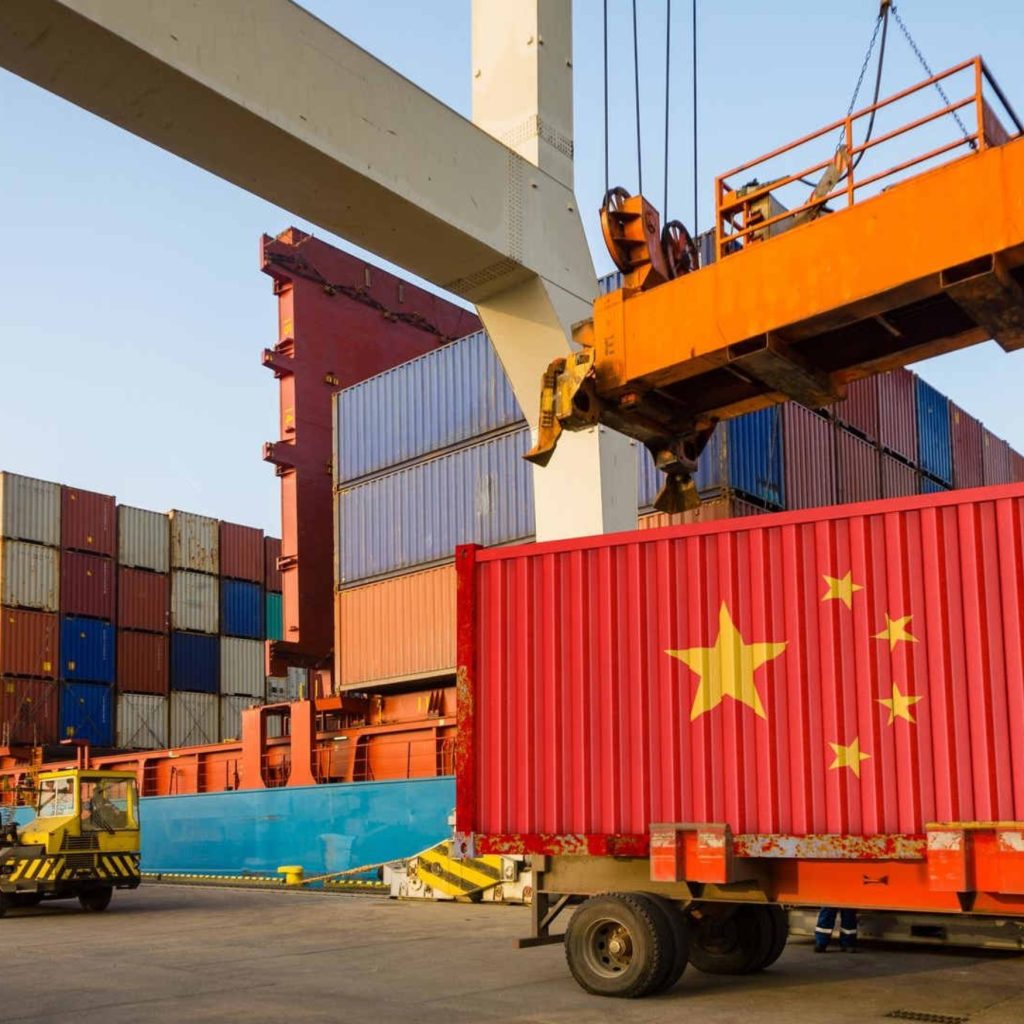
Cross-border overland trucking between Guangdong and Northern Vietnam often faces long border checkpoint queues and elevated fuel expenses. Consequently, our dedicated service for sea freight from Guangzhou to Haiphong provides a fast, dependable, and economical container shipping alternative.

1. Why Choose Sea Freight Over Cross-Border Trucking?
While overland border trucking offers door-to-door transit, maritime container shipping provides several substantial commercial advantages:
First, ocean shipping reduces freight budgets by 40% to 60% compared to cross-border highway trucking. For high-volume raw materials, sea freight protects manufacturing profit margins.
Second, ocean transport avoids congested land border crossings such as Huu Nghi (Friendship Pass) or Tan Thanh. Road border checkpoints often face chronic delays during agricultural export seasons or strict customs inspections.
Furthermore, ocean carriers easily accommodate heavy payloads and oversized cargo. Shippers can pack up to 26 to 28 metric tons of heavy equipment into a single 20ft container legally.
Finally, sea shipping reduces cargo handling risks. Factory personnel pack and seal the container at the Guangzhou origin warehouse, keeping contents secure until delivery in Vietnam.
2. Sailing Schedules and Transit Times
The maritime shipping route connecting Guangzhou and Haiphong is exceptionally short, fast, and frequent:
-
Ports of Loading (POL): Port of Guangzhou, primarily modern container berths at Nansha Terminal and Huangpu Port.
-
Port of Discharge (POD): Haiphong Port cluster, including Tan Vu, Dinh Vu, VIP Green, Nam Dinh Vu, and TC-HICT Lach Huyen.
-
Port-to-Port Ocean Transit: 2 to 4 days via direct feeder and liner services.
-
Total Door-to-Door Lead Time: Typically 4 to 6 business days, including origin factory drayage, customs export filings, ocean transit, and final delivery in Northern Vietnam.
-
Sailing Frequency: 6 to 8 scheduled departures per week operated by major regional intra-Asia carriers (such as SITC, Sinokor, CNC, and Cosco).
3. Comprehensive Shipping Modes: FCL vs. LCL

We provide versatile container shipping models tailored to your cargo dimensions and commercial shipment sizes:
Full Container Load (FCL)
FCL is the premier choice for volume production runs requiring exclusive container security:
-
20ft General Purpose (20’GP): Ideal for dense, heavy cargo like steel hardware, metal molds, industrial raw chemicals, and polymer resins.
-
40ft Standard & High Cube (40’GP / 40’HQ): Optimal for high-cube, lighter components such as garment fabrics, electronic consumer parts, plastic housings, and packaging.
-
Specialized Containers: We supply Open-Top and Flat-Rack equipment for oversized stamping machines and large industrial fabrication units.
FCL shipping prevents handling damage because goods remain locked inside a single container from origin to destination.
Less Than Container Load (LCL) Consolidation
LCL consolidation suits smaller raw material consignments measuring from 1 to 15 cubic meters (CBM):
-
Shippers deliver packaged cartons or pallets to our designated Container Freight Station (CFS) warehouses in Guangzhou.
-
Our warehouse team consolidates multiple commercial shipments into shared weekly ocean containers.
-
You pay strictly for the actual cubic volume (CBM) or gross weight (MT) your freight occupies.
Thus, LCL shipping enables lean manufacturing plants to maintain Just-in-Time inventory replenishment without paying for empty container space.
4. Key Commodities Imported from Guangzhou
This short-sea maritime lane handles diverse manufacturing and commercial supplies:
-
Industrial Machinery & Tooling: CNC milling centers, plastic injection molds, textile looms, and mechanical replacement components.
-
Textile & Garment Materials: Polyester yarn, synthetic fabrics, zippers, buttons, buckles, and leather accessories.
-
Electronics & Electrical Hardware: Printed circuit boards (PCBs), LED components, connectors, wiring harnesses, and power supplies.
-
Plastics & Chemicals: Injection-grade resin pellets, rubber compounds, adhesives, packaging films, and masterbatches.
-
Construction & Architectural Materials: Aluminum extrusions, ceramic tiles, plumbing fixtures, and lighting equipment.
5. Customs Clearance and Preferential Tariffs (Form E / RCEP)
Importing commercial cargo from China into Vietnam requires accurate trade documentation to prevent customs holds and overpaying duties:
Preferential Tariff Advantages (Form E & RCEP)
Vietnam and China share strong multilateral free trade agreements. Importers should secure a valid Certificate of Origin Form E (under the ASEAN–China Free Trade Area) or a Form RCEP.
These preferential origin certificates reduce import tariffs down to 0% for thousands of manufacturing commodities.
Key Export-Import Documentation Checklist
To ensure swift customs release upon berthing in Haiphong, compile the following commercial paperwork:
-
Commercial Invoice & Detailed Packing List: Listing accurate 8-digit HS codes, piece counts, net/gross weights, and package dimensions.
-
Ocean Bill of Lading (Seaway Bill or Surrendered B/L): Facilitating prompt cargo delivery without waiting for original paper documents.
-
Certificate of Origin (Form E / RCEP): Legally certified and electronically verified on the national trade portal.
-
Specialized Inspection Registration (If Applicable): For goods requiring quality checks, energy efficiency certificates, or technical safety appraisals under Vietnamese regulations.
6. End-to-End Operational Workflow
Our operations team manages every shipment across five streamlined operational stages:
Step 1: Booking Confirmation & Equipment Release
Submit cargo specifications and factory readiness dates to secure a competitive, all-inclusive freight quotation. Next, our Guangzhou agents dispatch clean containers directly to your supplier’s facility.
Step 2: Factory Loading & Port Gating
The supplier loads the container at their facility in Guangzhou, Foshan, or Dongguan. The hauler gates the sealed container into Nansha or Huangpu terminal before the designated CY closing deadline.
Step 3: Chinese Export Customs Clearance
Our local brokers submit export declarations via Chinese customs portals. Once authorities clear the declaration, the terminal loads the container onto the scheduled vessel.
Step 4: Short-Sea Ocean Voyage
The vessel departs the Pearl River Delta and sails southwest through the Gulf of Tonkin. Advanced digital vessel tracking systems provide real-time location updates throughout the 2-to-4-day voyage.
Step 5: Haiphong Discharge & Inland Factory Delivery
Upon arrival at Haiphong Port, our field runners handle customs declarations on the VNACCS system. Then, our dedicated trucking fleet delivers the container directly to industrial park docks across Bac Ninh, Hanoi, Hai Duong, or Vinh Phuc.
7. Practical Tips to Avoid Shipping Delays
Shippers can maximize supply chain reliability by adopting four practical operational habits:
First, request a Seaway Bill or Surrendered B/L (Telex Release) instead of traditional paper Original Bills. Because ocean transit takes only a few days, couriered paper documents often arrive late, causing port storage charges.
Second, verify HS codes and tariff descriptions on the Form E early. Discrepancies between commercial invoices and Certificate of Origin descriptions cause customs officers to reject duty-free tariff preferences.
Third, pack palletized cartons securely using heavy stretch wrap, edge protectors, and nylon strapping. Solid packing prevents internal carton shifting during heavy marine swells in the South China Sea.
Finally, reserve vessel bookings early ahead of major holiday periods. Demand surges dramatically prior to Chinese New Year and the Golden Week holidays, leading to terminal space shortages.
Frequently Asked Questions (FAQ)
What is the transit time from Guangzhou to Haiphong Port?
Direct ocean transit takes between 2 and 4 days. Total door-to-door delivery typically requires 4 to 6 business days.
Which terminal in Guangzhou is best for container shipping to Vietnam?
Nansha Terminal is the preferred deep-water gateway because it accommodates larger container vessels and offers more direct, frequent sailing loops to Haiphong.
Can I claim 0% import duty when importing machinery from Guangzhou?
Yes, provided the machinery item qualifies under the ASEAN–China Free Trade Agreement (ACFTA) and your supplier provides a valid, compliant Certificate of Origin Form E.
Our dedicated service for sea freight from Guangzhou to Haiphong connects Northern Vietnam factories directly to Southern China’s massive manufacturing ecosystem. Contact our logistics desk today to check sailing schedules, verify Form E eligibility, and secure competitive ocean freight rates for your cargo!
Read more:
Understanding CY/CY, CFS/CFS, and Door/CY: The Essential Ocean Freight Guide
5 Mặt hàng nên gửi hàng nhanh qua máy bay
