
Table of Contents
Reliable LCL Ocean Freight from USA to Cat Lai Port: Professional Consolidation Services
The United States represents a premier origin for advanced industrial components, scientific equipment, automotive replacement parts, and high-value consumer goods. Vietnamese manufacturers and trading businesses import thousands of American consignments monthly.
However, not every commercial order requires the capacity of a full 20ft or 40ft container. Shipping small cargo volumes inside partially empty full containers drives up landed costs unnecessarily.
Our dedicated LCL ocean freight from USA to Cat Lai Port provides an economical, secure, and scheduled sea freight solution. We consolidate multiple commercial shipments into shared containers weekly, delivering cargo directly to Ho Chi Minh City’s main maritime gateway.
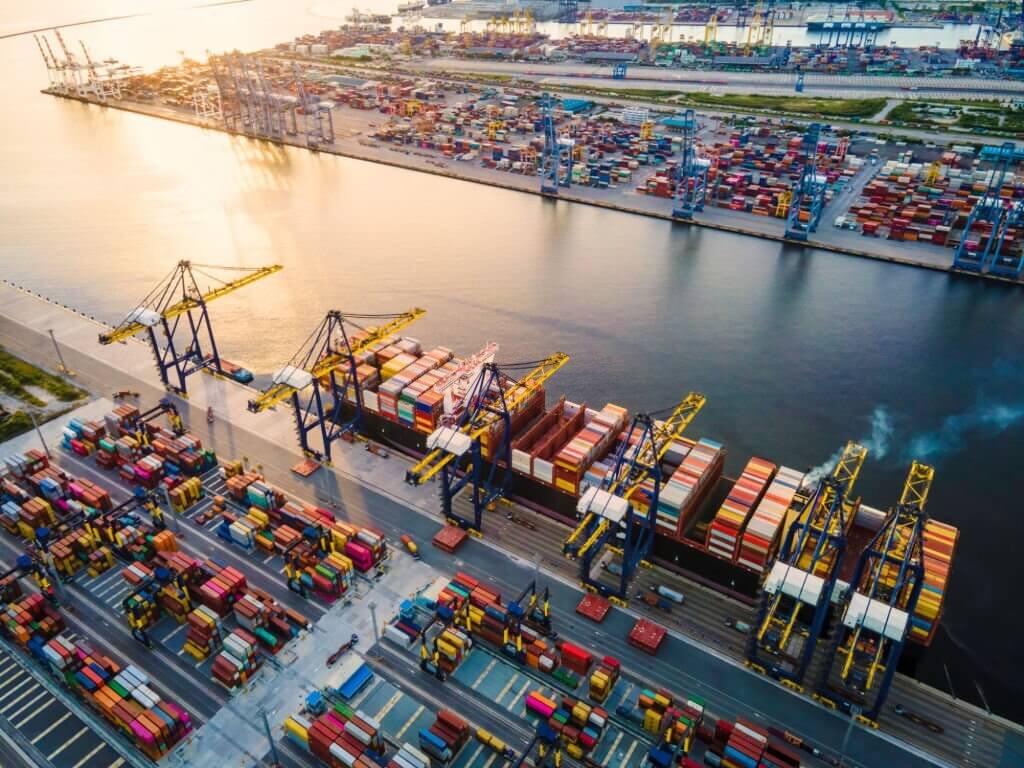
1. What Is LCL Shipping and How Does It Benefit Importers?
Less than Container Load (LCL) consolidation serves consignments measuring between 1 and 15 cubic meters (CBM):
Under this shipping model, multiple shippers share space inside a standard 40ft ocean container. Each cargo owner pays strictly for the exact volume (CBM) or weight (metric tons) their cargo occupies.
Furthermore, LCL consolidation supports agile procurement and lean inventory strategies. Businesses import smaller, frequent production batches without waiting to accumulate sufficient inventory for a full container.
Finally, ocean consolidation delivers substantial cost savings over air freight. For cargo weighing over 300 kilograms, ocean LCL cuts transportation expenses by 60% to 80%.
2. Major US Origin Hubs and Ocean Transit Times
We operate scheduled consolidation loops from all primary logistics hubs across the United States:
US West Coast Gateways (Fastest Transit)
-
Ports of Loading (POL): Port of Los Angeles (POLA), Port of Long Beach (POLB), and Oakland.
-
Origin CFS Hubs: Los Angeles, California and Seattle, Washington.
-
Port-to-Port Transit Time: 22 to 28 days to Cat Lai Port.
-
Key Advantage: Direct vessel routings across the Pacific Ocean offer the quickest ocean lead times.
US East Coast and Gulf Coast Hubs
-
Ports of Loading (POL): New York/New Jersey, Savannah, Houston, and Norfolk.
-
Origin CFS Hubs: Newark, New Jersey; Atlanta, Georgia; and Houston, Texas.
-
Port-to-Port Transit Time: 32 to 40 days to Cat Lai Port via transshipment hubs.
-
Key Advantage: Dedicated inland intermodal rail moves cargo smoothly from Midwest factories straight to coastal berths.
3. Top Commodities Imported via US–Cat Lai LCL Consolidation
This maritime trade lane handles diverse commercial products, industrial supplies, and consumer goods:
-
Industrial Machinery Spare Parts: Precision CNC tooling, pneumatic valves, hydraulic pumps, industrial filters, and sensor components.
-
Automotive & Motorcycle Parts: OEM replacement components, engine gaskets, electrical control modules, and suspension parts.
-
Chemicals & Raw Materials: Non-hazardous specialty additives, lubricants, resins, cosmetic raw materials, and laboratory diagnostic reagents.
-
Dietary Supplements & Cosmetics: Packaged vitamins, organic wellness formulas, skincare products, and dental equipment.
-
Commercial Electronics & IT Hardware: Networking routers, printed circuit boards (PCBs), testing analyzers, and specialized audio equipment.
4. Understanding LCL Freight Calculation: The Revenue Ton (W/M)

Consolidators calculate LCL ocean freight based on the international Weight or Measurement (W/M) rule:
-
Measurement Factor: 1 Cubic Meter (CBM) = Length (m) × Width (m) × Height (m).
-
Weight Factor: 1 Metric Ton (MT) = 1,000 Kilograms (kg).
-
Comparison Rule: 1 CBM equals 1,000 kg. Carriers bill freight charges based on whichever number is greater (the Revenue Ton).
For instance, a cargo pallet measuring 2 CBM and weighing 800 kg incurs freight charges based on 2 Revenue Tons. Conversely, a dense pallet measuring 1 CBM but weighing 1,500 kg bills at 1.5 Revenue Tons.
Understanding this formula helps procurement teams optimize packing configurations and eliminate unexpected transport billing surcharges.
5. End-to-End LCL Consolidation Workflow
Our experienced operations desk manages every consignment across five synchronized operational stages:
Step 1: Cargo Receiving at US Origin CFS
The American supplier dispatches palletized cargo to our nearest licensed Container Freight Station (CFS). Our receiving crew checks carton counts, inspects packaging integrity, and confirms verified gross weights.
Step 2: Consolidation and Container Stuffing
Our warehouse team arranges cargo carefully inside a 40ft High Cube container. Workers place heavy machinery pallets on the floor and load lighter cartons securely on top.
Step 3: US Export Customs and Transpacific Sailing
Our US brokers file Electronic Export Information (EEI) via the Automated Export System (AES). Once export authorities approve the manifest, the vessel sails across the Pacific toward Southern Vietnam.
Step 4: Deconsolidation at Cat Lai Port CFS
Upon container discharge at Cat Lai Terminal, stevedores transfer the consolidated box directly to the designated on-dock CFS warehouse. The warehouse team destuffs the container and tallies cargo against the Master Cargo Manifest.
Step 5: Customs Clearance and Final Warehouse Delivery
Our customs runners submit import declarations via the VNACCS system. Once customs clears the declaration, our local delivery trucks collect the cargo from the CFS and deliver it to your factory.
6. Essential Documentation Checklist for US Imports
To guarantee swift deconsolidation and import customs release at Cat Lai CFS, compile the following paperwork:
-
Commercial Invoice & Packing List: Detailing accurate 8-digit HS codes, commercial values, net/gross weights, and unit quantities.
-
House Bill of Lading (HBL): Issued as a Seaway Bill or Telex Release to enable rapid cargo handover without waiting for physical paper documents.
-
Cargo Arrival Notice & Delivery Order (D/O): Issued by our local office to facilitate CFS release.
-
Material Safety Data Sheet (MSDS): Mandatory for chemical drums, liquid reagents, and products containing lithium batteries.
-
Specialized Inspection Dossiers (If Applicable): Required for food supplements, medical equipment, or functional cosmetics under Ministry of Health regulations.
7. Practical Tips to Avoid LCL Surcharges at Cat Lai
Shippers can prevent unexpected storage charges and cargo damage by implementing four practical operational habits:
First, mandate professional palletization and heavy stretch wrapping at the US supplier’s facility. Sturdy wooden pallets allow warehouse forklifts to handle cargo without puncturing exterior packaging.
Second, ensure all wooden packaging displays official ISPM 15 fumigation stamps (IPPC markings). Raw uncertified timber crates trigger biosecurity holds and expensive fumigation penalties upon arrival at Cat Lai.
Third, audit invoice descriptions and HS codes before cargo arrives. Discrepancies between US export filings and Vietnamese customs declarations cause unnecessary customs physical inspections (Red Channel).
Finally, track container deconsolidation updates closely. Cat Lai CFS warehouses offer limited free storage time (typically 5 to 7 days). Clearing customs promptly prevents expensive port warehouse demurrage fees.
Frequently Asked Questions (FAQ)
What is the average ocean transit time for LCL cargo from Los Angeles to Cat Lai?
Port-to-port ocean transit takes between 22 and 28 days. Total door-to-door transit typically requires 30 to 35 days, including consolidation and CFS deconsolidation.
Where do I collect my LCL cargo at Cat Lai Port?
Your cargo is unstuffed and stored inside authorized on-dock CFS warehouses at Cat Lai Terminal (such as Tan Cang CFS). Importers collect goods using the customs release slip and paid D/O.
How does LCL pricing differ from FCL shipping?
LCL rates apply strictly per cubic meter (CBM) or metric ton (MT). FCL rates apply as a flat lump-sum cost per complete 20ft or 40ft container box.
Our dedicated service for LCL ocean freight from USA to Cat Lai Port ensures predictable transit schedules, transparent port billing, and complete cargo safety. Contact our ocean logistics desk today to receive an instant CBM freight quote and streamline your American supply chain!
Read more:
CONTAINER FREIGHT STATION (CFS) – ITS ROLE IN MODERN LOGISTICS AND LCL SHIPPING
Dịch vụ vận tải đường bộ từ Quảng Ngãi đi Phnom Penh
