Table of Contents
Essential Shipping Documents for International Ocean Freight: The Complete Guide
International maritime trade moves over 80% of global merchandise by volume. However, physical container movements depend entirely on the precision of the accompanying commercial paperwork.
Even a minor typographical error, mismatched HS code, or missing certificate can halt a multi-million-dollar cargo consignment. In fact, documentation discrepancies cause severe port customs holds, unexpected storage demurrage, and costly payment rejections under Letters of Credit (L/C).
Mastering the essential shipping documents for ocean freight guarantees operational compliance across every border gate. Furthermore, structured documentation accelerates terminal releases, optimizes duty payments, and protects cross-border commercial relationships.
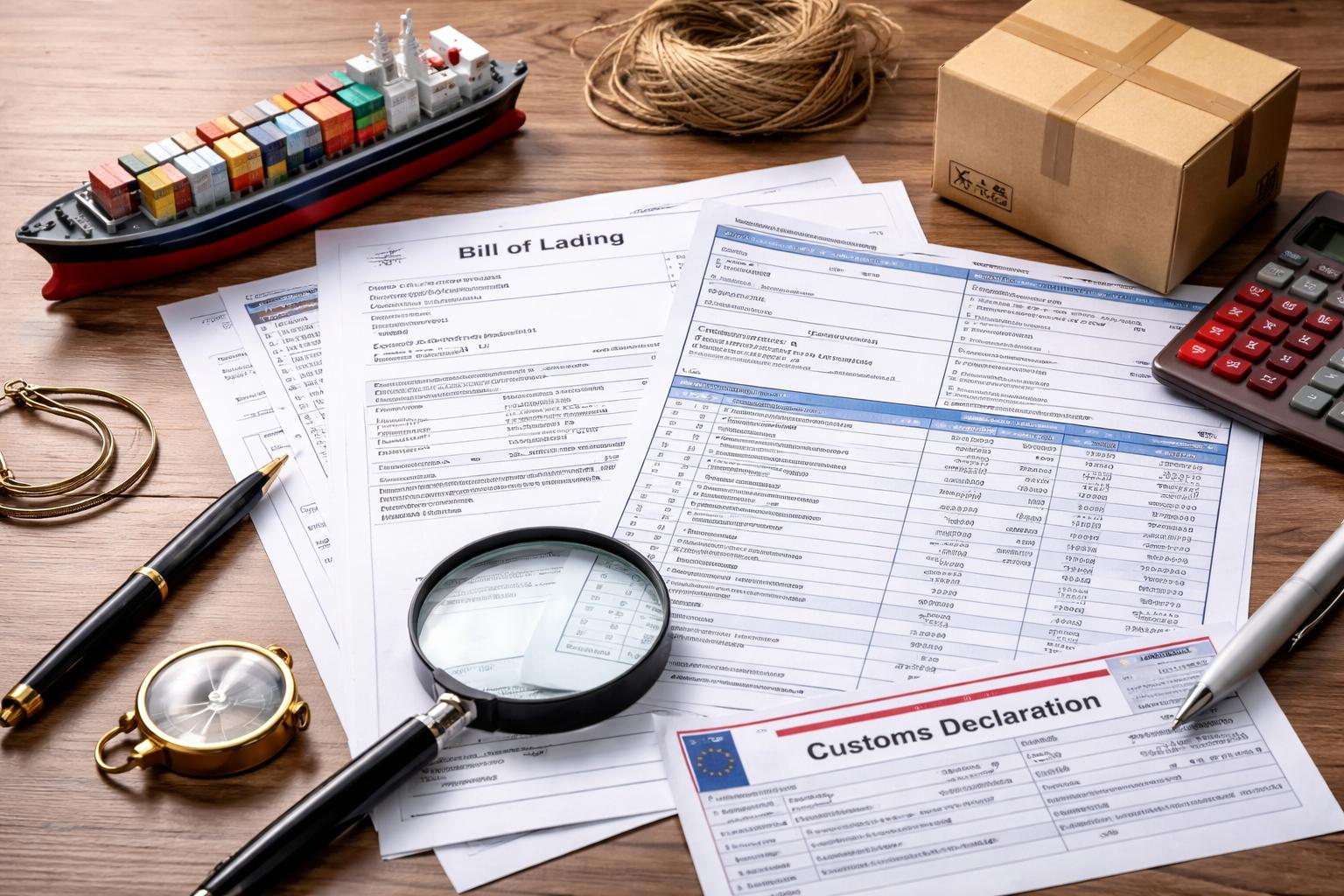
1. The Core Commercial Documents (The Foundation)
Every commercial ocean freight shipment begins with three fundamental trade documents:
Sales Contract (Hợp đồng thương mại)
The sales contract establishes the legal foundation of the entire cross-border transaction. It clearly outlines the commodity description, contract value, Incoterms 2020 rules, payment terms, and delivery schedules. Every document generated subsequently must align perfectly with this initial contract.
Commercial Invoice (Hóa đơn thương mại – CI)
Issued by the seller to the buyer, the commercial invoice serves as the primary financial document for border agencies. Customs officers rely on the commercial invoice to assess product valuation, calculate import tariffs, and apply value-added taxes (VAT).
Key information includes:
-
Detailed legal names, addresses, and tax identification numbers of buyer and seller.
-
Precise description of goods and correct 6-digit to 10-digit Harmonized System (HS) codes.
-
Unit prices, total invoice currency, and agreed Incoterms terms (e.g., FOB Haiphong or CIF Hamburg).
-
Banking coordinates and payment terms (e.g., T/T, D/P, or Letter of Credit).
Packing List (Phiếu đóng gói hàng hóa – PL)
The packing list provides an exhaustive technical breakdown of how the shipment is physically packaged. While the commercial invoice highlights financial values, the packing list details physical volumes, enabling customs inspectors and stevedores to verify freight tallies.
It itemizes package counts, packaging types (pallets, cartons, drums), net weight, gross weight, cubic volume (CBM), and distinct shipping marks.
2. Core Transport and Operational Documents
Moving containers across international waters requires mandatory operational and safety filings:
Ocean Bill of Lading (Vận đơn đường biển – B/L)
The Bill of Lading is the most critical maritime transport document. Issued by the ocean shipping line or freight forwarder, it fulfills three distinct legal functions:
-
Receipt of Goods: Confirms that the carrier received cargo in apparent good order and condition.
-
Contract of Carriage: Outlines terms, conditions, and carrier liabilities throughout the sea voyage.
-
Document of Title: Authorizes the legal holder to claim physical custody of the container at destination.
Shippers choose between negotiable Original Bills of Lading (common under L/C payments) and non-negotiable electronic formats like Surrendered B/L (Telex Release) or Seaway Bills for fast short-sea transits.
Verified Gross Mass Declaration (Phiếu khai báo VGM)
Under the International Maritime Organization (IMO) SOLAS Convention, shippers must declare the Verified Gross Mass (VGM) before vessel loading. The container terminal strictly rejects any container lacking an official electronic VGM, preventing vessel stability hazards.
Booking Confirmation and Shipping Instructions (SI)
The booking confirmation reserves container equipment and vessel space with the carrier. Subsequently, the exporter submits Shipping Instructions (SI) before the document cut-off deadline to generate an accurate Draft Bill of Lading.
3. Customs and Regulatory Compliance Documents

Border authorities require formal declarations and origin certifications to regulate international trade:
Customs Declaration (Tờ khai hải quan)
The official electronic declaration filed into the national customs system (such as VNACCS in Vietnam). It records cargo values, tariff codes, and duty payment status, generating an automated Green, Yellow, or Red clearance channel.
Certificate of Origin (Chứng nhận xuất xứ hàng hóa – C/O)
Issued by authorized government ministries or Chambers of Commerce, the C/O certifies where goods were manufactured:
-
Non-Preferential C/O: Used for trade quotas, anti-dumping checks, and statistical tracking.
-
Preferential C/O: Forms like Form D (ASEAN), Form E (China), Form EUR.1 (EU), or Form AI (India) eliminate or drastically reduce import tariffs at destination ports.
4. Specialized and Commodity-Specific Certificates
Depending on product nature, destination customs may mandate specialized technical inspections:
-
Phytosanitary Certificate (Giấy kiểm dịch thực vật): Mandatory for agricultural commodities, raw spices, timber, and grain exports to prove freedom from regulated pests.
-
Health / Veterinary Certificate: Required for meat, poultry, seafood, dairy products, and processed food consignments.
-
Fumigation Certificate (ISPM 15): Proves that solid wood packaging, timber crates, and pallets underwent certified methyl bromide or heat treatment.
-
Material Safety Data Sheet (MSDS) & Dangerous Goods Note (DGN): Mandatory for Class 1 to 9 hazardous chemicals, flammable liquids, and lithium batteries under the IMDG Code.
-
Certificate of Analysis (COA) / Quality Inspection (CQ): Proves compliance with industrial specifications or state quality standards.
5. Overview of Essential Ocean Freight Documents
| Document | Primary Issuer | Core Function | Requirement Level |
| Sales Contract | Exporter & Importer | Commercial and legal agreement | Mandatory |
| Commercial Invoice | Exporter / Seller | Customs valuation and taxation | Mandatory |
| Packing List | Exporter / Shipper | Physical cargo specifications and tally | Mandatory |
| Ocean Bill of Lading | Ocean Carrier / Forwarder | Contract of carriage & title document | Mandatory |
| Customs Declaration | Customs Broker / Shipper | Regulatory border release | Mandatory |
| VGM Declaration | Shipper / Weighing Station | SOLAS vessel maritime safety | Mandatory for FCL |
| Certificate of Origin | Chamber of Commerce / Ministry | Tariff preference eligibility | Highly Recommended |
| Specialized Certificates | Testing Labs / Biosecurity Agencies | Quality, safety, and health compliance | Conditional on commodity |
6. Practical Tips to Prevent Document Discrepancies
Shippers can eliminate costly operational delays by enforcing four rigorous document-control practices:
First, maintain total consistency across all shipping forms. Ensure that commodity descriptions, HS codes, container numbers, and seal markings match perfectly across the Invoice, Packing List, and Bill of Lading.
Second, submit Shipping Instructions well before the carrier’s SI cut-off deadline. Amending an ocean bill of lading after vessel departure incurs heavy manifest amendment penalties.
Third, verify preferential origin criteria before issuing Certificates of Origin. Submitting an invalid C/O form leads to immediate customs rejection and full non-preferential duty clawbacks.
Finally, establish a digital document repository. Storing scanned copies of stamped releases, inspection certificates, and bank remittance slips ensures rapid retrieval during post-clearance customs audits.
Frequently Asked Questions (FAQ)
What is the difference between a Proforma Invoice and a Commercial Invoice?
A Proforma Invoice is a preliminary quotation used to arrange import permits or open Letters of Credit. In contrast, a Commercial Invoice represents the finalized legal demand for payment used for official customs valuation.
What happens if the Bill of Lading details do not match the Packing List?
Customs officers will suspect clerical fraud or cargo smuggling, halting the container for physical inspection (Red Channel) and assessing administrative discrepancy fines.
When should original paper shipping documents be mailed via courier?
Original paper documents are essential when trading under traditional Letters of Credit (L/C) or using negotiable Original Bills of Lading that require bank endorsement before cargo delivery.
Managing essential shipping documents for ocean freight requires rigorous attention to detail, trade law expertise, and disciplined verification. Contact our international shipping desk today to review your export-import documentation and ensure seamless customs clearance for your upcoming maritime shipments!
Read more:
Tay Ninh Official Border Exports Surge: Key Gateways, Trends, and Cross-Border Logistics
Potato Export from Kien Giang to China
