Table of Contents
Imported Steel Cargo and Specialized Inspection Procedures
Importing steel requires very strict specialized inspection procedures. Legal compliance helps clear shipments quickly. Enterprises will avoid storage risks or penalties.
Accurate clearance safeguards sản phẩm (product) quality. From there, enterprises control costs and giá cả (pricing) well. Timely supplies feed every kênh phân phối (distribution channel). This creates a solid foundation for xúc tiến thương mại (trade promotion).
1.1. Specialized Inspection Regulations for Steel Imports
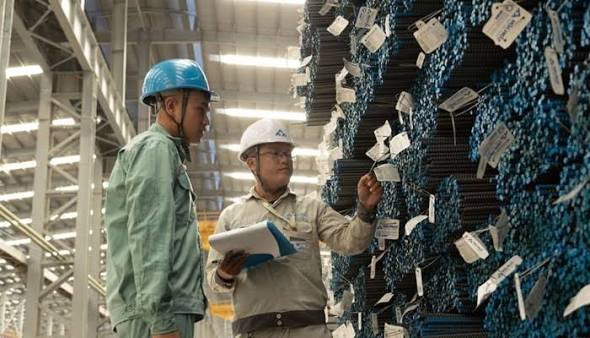
Imported steel must comply with many technical standards. State agencies control this strictly to protect the market.
1.1.1. State Quality Inspections
-
Compliance with standards: Steel must meet respective QCVN or TCVN standards.
-
Specialized agencies: Steel items are mostly managed by the Ministry of Science and Technology.
-
Registration dossiers: Enterprises submit dossiers on the National Single Window portal.
1.1.2. Trade Remedy Policies
-
Anti-dumping duties: Many steel HS codes face very high anti-dumping taxes.
-
Origin checks: Carefully check C/O to avoid trade safeguard duties.
-
Cost optimization: Valid C/O helps enterprises minimize financial risks.
1.2. 5-Step Process for Importing and Inspecting Steel
Enterprises follow 5 standard steps to import steel items:
1.3. Notes When Storing Steel at Private Warehouses
Testing steel samples often takes 3 to 7 days. Long port storage will cost a lot of money.
1.3.1. Solutions for Warehouse Storage
-
Storage request letters: Enterprises ask customs to store goods at private warehouses.
-
Reducing container fees: This method avoids extremely expensive demurrage fees.
-
Status quo principle: Never use steel for production without official certificates.
1.4. Benefits of Complying with Inspection Procedures
Completing precise procedures brings huge value to supply chains:
1.4.1. Elevating Prestige and Logistics Efficiency
-
Ensuring legality: Quality certificates confirm safe origins for sản phẩm (products).
-
Avoiding price hikes: Saving port fees helps stabilize giá cả (pricing).
-
Stabilizing supplies: Timely clearance maintains seamless flow for kênh phân phối (distribution channels).
-
Boosting brand prestige: Valid legal files create advantages during xúc tiến thương mại (trade promotion).
1.5. Conclusion
Importing steel requires understanding quality inspection rules clearly. Enterprises doing this well will protect sản phẩm (products). This stabilizes giá cả (pricing) and develops kênh phân phối (distribution channels). Thereby, it creates strong momentum for global xúc tiến thương mại (trade promotion).
1.6. Related Resources
- VIETNAM LOGISTICS CONTINUES TO EVOLVE
Separate Section: Frequently Asked Questions (Q&A)
Q1. Does imported scrap steel require specialized inspections?
Yes. Scrap steel undergoes strict environmental and impurity checks.
Q2. Which agency conducts steel sampling at seaports?
State-designated inspection centers will directly visit ports for sampling.
Q3. How long does standard steel sample testing take?
Testing mechanical and chemical properties usually takes 3 to 7 working days.
Q4. What happens if imported steel fails quality tests?
Customs will force enterprises to re-export that shipment out of Vietnam.
Q5. Does Vietship support specialized inspections for steel?
Yes. We support quality registrations, sampling, and full-package clearance.
