
Table of Contents
Road Transport of Dangerous Goods: Critical Rules, Compliance, and Safety Guidelines
Transporting hazardous materials and chemicals by road poses severe risks to drivers, highways, and surrounding environments. Consequently, transport ministries and international agencies enforce strict regulatory frameworks to regulate commercial freight movements.
In Vietnam, transport operations must comply strictly with Decree 34/2024/ND-CP and national road safety laws. Internationally, haulers adhere to the European Agreement concerning the International Carriage of Dangerous Goods by Road (ADR).
Failing to manage the road transport of dangerous goods triggers heavy fines, vehicle impoundment, or catastrophic accidents. Therefore, shippers must implement comprehensive safety protocols to maintain flawless regulatory compliance across every kilometer.

1. Classifying Dangerous Goods (9 Hazard Classes)
Before loading cargo, dispatchers must classify chemicals accurately according to the United Nations (UN) classification system:
-
Class 1 (Explosives): Fireworks, industrial flares, mining detonators, and ammunition supplies.
-
Class 2 (Gases): Flammable gas (LPG, methane), non-flammable non-toxic gas (nitrogen, argon), and toxic gas (chlorine).
-
Class 3 (Flammable Liquids): Commercial gasoline, diesel, alcohol, industrial solvents, solvent-based paints, and chemical thinners.
-
Class 4 (Flammable Solids): Matchsticks, sulfur, phosphorus, and substances liable to spontaneous combustion or emitting flammable gases when wet.
-
Class 5 (Oxidizing Substances & Organic Peroxides): Fertilizer nitrates, hydrogen peroxide, and chemical bleaching catalysts.
-
Class 6 (Toxic & Infectious Substances): Agricultural pesticides, laboratory biohazard cultures, medical specimens, and cyanide compounds.
-
Class 7 (Radioactive Material): Medical isotope equipment, radiation gauges, and industrial radiographic testing sources.
-
Class 8 (Corrosives): Battery acids, sulfuric acid, hydrochloric acid, caustic soda, and battery fluid solutions.
-
Class 9 (Miscellaneous Dangerous Goods): Lithium-ion batteries, dry ice, genetically modified organisms, and environmentally hazardous substances.
2. Mandatory Documentation and Transport Permits
Drivers must carry complete regulatory dossiers inside vehicle cabs during physical transit:
Material Safety Data Sheet (MSDS)
The chemical manufacturer must supply an active, compliant MSDS or Safety Data Sheet (SDS). This document details chemical properties, flash points, toxicity hazards, personal protective equipment (PPE), and emergency response steps.
Dangerous Goods Transport Permit
Under Vietnamese law, transport haulers must obtain specialized transport permits from competent ministries:
-
Ministry of Public Security: Authorizes Class 1, 2, 3, 4, and 9 movements.
-
Ministry of Science and Technology: Regulates Class 5, 7, and 8 substances.
-
Ministry of Agriculture and Rural Development: Regulates Class 6 plant protection chemicals.
Tremcard and Dangerous Goods Declaration
The hauler must compile a transport emergency card (Tremcard) outlining driver counter-measures during transit spills or thermal events. In addition, a formal dangerous goods declaration specifies UN numbers, correct technical shipping names, and packaging groups.
3. Packaging and UN-Certified Markings

Improper chemical packaging represents the leading cause of highway chemical leaks:
First, shippers must use certified UN packaging carrying embossed specification codes (such as 1A1 steel drums or 4G fibreboard boxes). Packaging durability matches product hazard groups: Packing Group I (High Hazard), Group II (Medium Hazard), or Group III (Low Hazard).
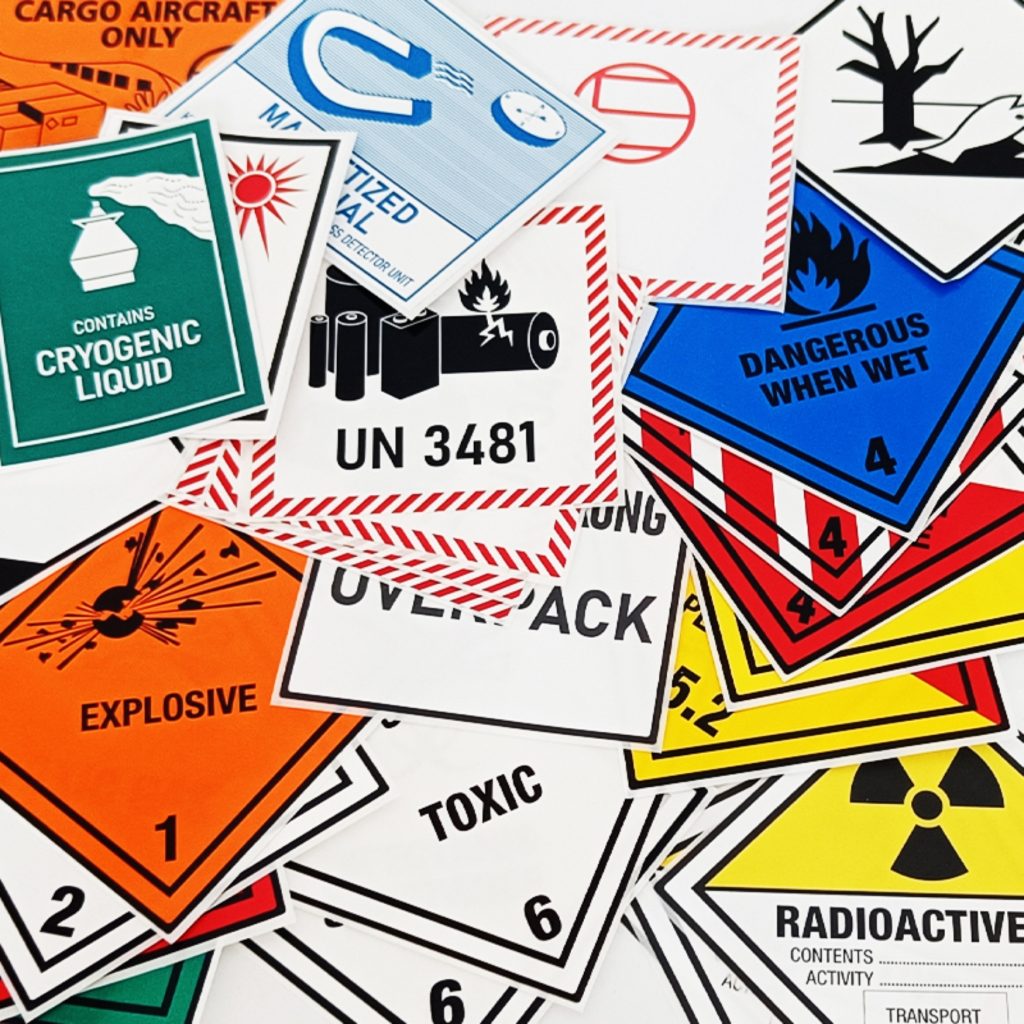
Second, workers must affix standardized diamond hazard labels clearly on opposite sides of every carton, drum, and intermediate bulk container (IBC).
Third, every chemical package must display the official 4-digit UN identification number alongside its proper chemical shipping name.
Finally, containers require high-visibility external warning placards. Drivers must mount reflective hazard signs and orange rectangular plates displaying UN identification numbers onto both sides and rear doors.
4. Vehicle Safety and Driver Requirements
Haulers must prepare road tractors, trailers, and drivers meticulously before departure:
-
Certified Driver Training: Drivers and escorts must hold valid vocational certificates authorizing the transport of dangerous goods. In addition, drivers undergo regular training on emergency spill response and industrial fire extinguishing.
-
Fire Suppression Equipment: Vehicles must carry dry powder fire extinguishers, spark arrestors on exhaust pipes, and grounding chains to dissipate static electricity.
-
Personal Protective Gear (PPE): Cabs must include chemical splash goggles, neoprene gloves, full-face respirators, emergency eyewash solutions, and absorbent spill pads.
-
Restricted Routes and Timetables: Hazardous cargo trucks must avoid densely populated city centers during daytime peak traffic hours. Dispatchers map designated bypass expressways and follow approved speed thresholds consistently.
5. Practical Checklist to Prevent Transit Disasters
Shippers can guarantee incident-free road freight by enforcing four vital operational disciplines:
First, audit cargo compatibility matrices before consolidating multiple chemicals inside the same container or box truck. Never mix Class 3 flammable liquids with Class 5 strong oxidizers, because leaks cause spontaneous explosions.
Second, secure drums, cylinders, and pallets with heavy-duty ratchet straps and anti-slip rubber mats. Eliminating internal movement prevents cargo shifting and puncture ruptures during sudden highway braking maneuvers.
Third, confirm that vehicles feature functional real-time GPS tracking devices and cabin dashcams. Constant telemetry monitoring allows dispatchers to track transit speeds and detect unauthorized route deviations immediately.
Finally, verify cargo insurance policies before dispatch. Traditional cargo policies frequently exclude hazardous substances; therefore, secure dedicated environmental liability and hazardous chemical transit insurance.
Frequently Asked Questions (FAQ)
What is the most critical document for transporting hazardous chemicals by road?
The Material Safety Data Sheet (MSDS) and the official dangerous goods transport permit issued by authorized ministries are the most critical documents.
Can different classes of dangerous goods travel inside the same truck?
Only if they are chemically compatible. International segregation tables strictly prohibit mixing reactive hazard classes, such as oxidizers and flammable liquids, within the same load space.
Are lithium-ion batteries classified as dangerous goods for road freight?
Yes. International regulations classify lithium-ion batteries under Class 9 (UN 3480 for standalone batteries and UN 3481 for batteries packed with or contained in equipment).
Executing the road transport of dangerous goods demands deep regulatory expertise, certified vehicles, and stringent safety protocols. Contact our specialized chemical logistics desk today to arrange compliant vehicle fleets, secure ministry transport permits, and manage safe freight haulage across Vietnam!
Read more:
WHAT IS A LOGISTICS HUB? ITS ROLE IN MODERN SUPPLY CHAINS
Chuyển phát nhanh từ Hồ Chí Minh đến Đồng Nai nhanh gọn giá tốt
