Table of Contents
Sea Freight Shipping to Hamburg Port: The Comprehensive Trade Guide
Germany stands as Vietnam’s largest trading partner within the European Union. Every day, substantial volumes of consumer merchandise, industrial components, and agricultural staples leave Vietnamese factories for German distribution hubs.
The Port of Hamburg functions as Germany’s premier maritime gateway. Furthermore, it operates as the third-busiest container harbor in Europe.
Choosing a professional service for sea freight to Hamburg gives your business direct access to Central European consumers. Moreover, reliable ocean shipping protects your operating margins while maintaining consistent inventory replenishment.
1. Why Ship Cargo to the Port of Hamburg?
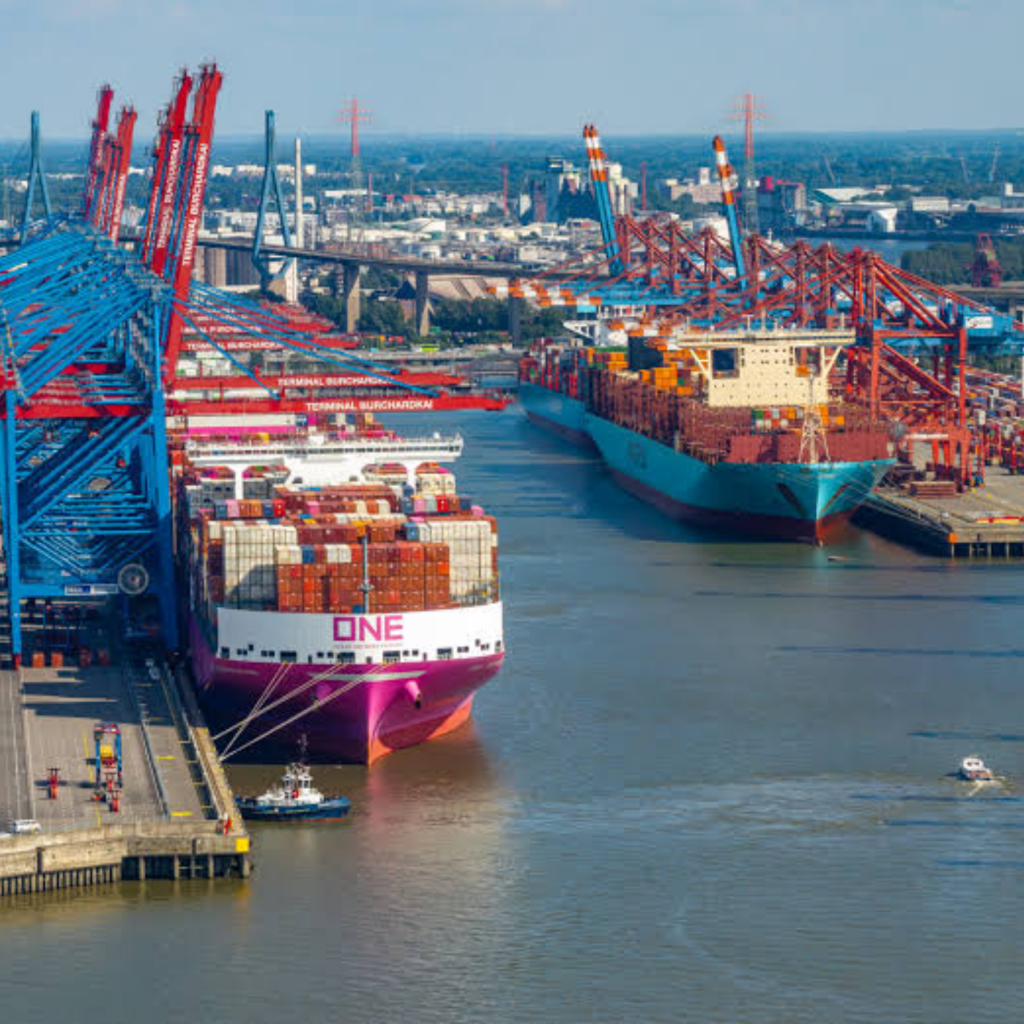
The Port of Hamburg (DEHAM) serves as an essential hub for European trade. Specifically, several structural advantages make it the preferred destination port for international shippers:
-
Extensive Rail Connectivity: Hamburg connects directly to over 2,000 weekly container freight trains. Consequently, cargo moves seamlessly into Southern Germany, Austria, Poland, and the Czech Republic.
-
Modern Container Terminals: The port features high-capacity container terminals, including Altenwerder (CTA) and Burchardkai (CTB). Therefore, automated facilities handle mega-vessels quickly and safely.
-
Streamlined German Customs: Port authorities utilize advanced electronic clearance systems. As a result, compliant shipments clear customs boundaries with minimal dwell times.
2. Sailing Routes and Port-to-Port Transit Times
Transit times from Vietnam to Hamburg depend on your origin terminal and carrier routing:
From Southern Vietnam (Cai Mep / Cat Lai)
-
Routing Type: Direct mother-vessel sailings or single transshipment via regional hubs.
-
Average Ocean Transit Time: 30 to 38 days port-to-port.
-
Departure Ports: Cai Mep deep-water terminals or Cat Lai Port barge transfers.
From Northern Vietnam (Haiphong Port)
-
Routing Type: Direct deep-water services from Lach Huyen (TC-HICT) or feeder services via Singapore.
-
Average Ocean Transit Time: 32 to 42 days port-to-port.
-
Departure Ports: Lach Huyen terminals (TC-HICT) and Dinh Vu port facilities.
Carriers provide scheduled weekly departures from both regions. Therefore, shippers can plan production runs and factory container stuffing with high predictability.
3. Shipping Options: FCL vs. LCL to Hamburg
Selecting the right container model ensures cost-effective cargo delivery without paying for empty space:
Full Container Load (FCL)
FCL remains the most economical choice for high-volume commercial shipments:
-
20ft General Purpose (20’GP): Best suited for high-density, heavy goods such as coffee beans, black pepper, rubber, and metal hardware.
-
40ft Standard & High Cube (40’GP / 40’HQ): Optimal for lightweight, voluminous freight including footwear, garments, furniture, and consumer electronics.
-
Specialized Reefer Containers: Precise temperature control for frozen seafood, fruit preserves, and organic foods.
In addition, FCL shipments minimize intermediate touchpoints because containers remain sealed until they reach the German consignee.
Less than Container Load (LCL) Consolidation
LCL serves smaller consignments ranging from 1 to 15 cubic meters (CBM):
-
Shippers deliver packaged cargo directly to consolidation CFS warehouses in Ho Chi Minh City or Haiphong.
-
Next, freight forwarders consolidate multiple consignments securely into shared containers bound for Hamburg.
-
Shippers pay strictly for the volume (CBM) or weight (MT) their freight occupies.
Thus, LCL shipping allows growing exporters to fulfill small trial orders without incurring full container rates.
4. Key Commodities Shipped from Vietnam to Germany
Commercial trade between Vietnam and Germany covers a diverse spectrum of products:
-
Textiles, Garments, & Footwear: Sports shoes, outerwear, knitwear, and safety workwear.
-
Wood Products & Furniture: Wooden dining sets, outdoor patio furniture, and interior cabinetry.
-
Electronics & Electrical Goods: Smart device accessories, circuit boards, and household appliances.
-
Agricultural Commodities: Robusta coffee beans, cashew nuts, black pepper, and processed spices.
-
Mechanical & Plastic Products: Precision machinery components, injection-molded plastics, and industrial packaging.
5. EU Customs Compliance and Required Documentation

Shipping to Germany requires strict compliance with European Union import standards. Exporters must prepare complete documentation prior to vessel departure:
-
Commercial Invoice & Packing List: Providing detailed product descriptions, Harmonized System (HS) codes, net/gross weights, and package counts.
-
Ocean Bill of Lading (B/L): The official receipt of cargo issued as an original B/L or a Sea Waybill.
-
EVFTA Certificate of Origin (Form EUR.1): This certificate is vital. It enables German buyers to claim 0% or reduced preferential tariff rates under the EU–Vietnam Free Trade Agreement.
-
Registered Exporter (REX) Declaration: For consignments under EUR 6,000, exporters make self-declarations of origin directly on commercial invoices.
-
Fumigation & Phytosanitary Certificates: Mandatory for raw timber packaging (ISPM 15) and agricultural plant consignments.
-
EU Timber Regulation (EUTR) & Due Diligence: Verification that timber products originate from certified legal forest reserves.
6. End-to-End Shipping Workflow to Hamburg
Our operations team manages every phase of your shipment systematically through five clear stages:
-
Stage 1: Booking Confirmation: We secure container space on premier ocean carriers and dispatch clean empty containers directly to your manufacturing facility.
-
Stage 2: Export Customs Clearance: Our experienced customs brokers submit export declarations swiftly through national electronic customs systems.
-
Stage 3: Ocean Voyage: Your container travels across international shipping lanes while automated satellite tracking keeps you updated at every milestone.
-
Stage 4: Vessel Discharging at Hamburg: Massive terminal gantry cranes transfer containers quickly into secured storage stacks at modern port terminals.
-
Stage 5: Inland European Delivery: Scheduled intermodal freight trains or regional container trucks transport your shipment directly to your receiver’s warehouse.
7. Practical Tips to Optimize Shipping Costs
Shippers can reduce transport expenses and avoid unnecessary penalties by adopting three practical steps:
First, book vessel space at least two weeks before cargo completion. Early booking guarantees container equipment and protects you against sudden ocean freight spot-rate increases.
Second, prepare your EUR.1 certificates and commercial paperwork accurately. Accurate documents eliminate expensive German customs inspection holds at terminal gates.
Finally, negotiate extended free demurrage and detention (D&D) windows with your carrier. Having at least 10 to 14 free days provides financial protection during port congestion periods.
Frequently Asked Questions (FAQ)
How long does sea freight take from Vietnam to Hamburg?
Standard ocean transit takes between 30 and 42 days depending on the departure port and intermediate transshipment schedules.
How does the EVFTA agreement benefit exports to Germany?
The EVFTA eliminates import tariffs on most manufactured items, textiles, and agricultural products entering Germany from Vietnam.
Can you handle door-to-door delivery within Germany?
Yes. Our European agency network provides complete door-to-door delivery, including import customs brokerage, container drayage, and warehouse destuffing throughout Germany.
Read more:
Sea Freight vs Road Transport in Vietnam: North-South Cost Comparison
