
Table of Contents
Specialized Inspection Registration Process: The Step-by-Step Guide for Importers
Clearing import customs involves more than paying tariffs and submitting commercial invoices. In fact, many manufactured items and agricultural goods require technical government approval before release.
Border agencies call this regulatory mechanism specialized inspection (KTCN). Specialized agencies inspect commercial consignments to safeguard public health, technical safety, and consumer security.
Navigating the specialized inspection registration process correctly prevents costly terminal storage and shipment delays. Furthermore, structured compliance guarantees seamless gate-out operations across Vietnamese container seaports and international border crossings.

1. What Is Specialized Inspection in Import Logistics?
Specialized inspection refers to mandatory technical compliance assessments conducted by designated government ministries. Customs authorities will not grant unconditional cargo clearance until competent agencies confirm product conformity.
Depending on product classification, different ministries oversee specific technical domains:
-
Ministry of Industry and Trade (MOIT): Regulates industrial chemicals, energy efficiency labels, textiles, and heavy industrial equipment.
-
Ministry of Science and Technology (MOST): Controls technical safety standards for electrical home appliances, children’s toys, and measuring instruments.
-
Ministry of Agriculture and Rural Development (MARD): Enforces plant quarantine, animal quarantine, veterinary medicines, animal feed, and fertilizer safety.
-
Ministry of Health (MOH): Oversees food safety standards, medical devices, cosmetics, pharmaceuticals, and public health chemicals.
-
Ministry of Transport (MOT): Inspects motor vehicles, special-use construction trucks, and automotive spare parts.
2. Common Types of Specialized Inspections
Customs regulations divide technical oversight into four broad procedural categories:
State Quality Inspection
Inspectors verify that manufactured goods comply with national technical regulations (QCVN). For example, electrical home appliances undergo rigorous safety tests to verify electrical insulation and fire resistance.
Food Safety Inspection
All imported consumer food products, food packaging materials, and culinary additives undergo food safety screening. Authorities inspect goods visually, conduct laboratory tests, or check existing international health certifications.
Plant and Animal Quarantine
Live animals, agricultural produce, unmanufactured wood, and animal byproducts require quarantine checks. Biosecurity inspectors check consignments carefully to prevent foreign pests or animal diseases from entering domestic ecosystems.
Energy Efficiency Certification
Importers of power-consuming devices must register energy efficiency tests. Items like air conditioners, commercial refrigerators, and electric motors must display certified energy labels before reaching consumer markets.
3. Essential Documentation Checklist
Before submitting your inspection application, compile the following commercial trade dossier:
-
Specialized Inspection Registration Form: The standard ministerial application form detailing product characteristics, manufacturer data, and importer details.
-
Commercial Invoice & Packing List: Detailing exact unit quantities, Harmonized System (HS) codes, package dimensions, and gross/net weights.
-
Ocean Bill of Lading (B/L) or Air Waybill (AWB): Confirming transport routing, container identification numbers, and vessel arrival dates.
-
Certificate of Quality / Test Reports (COA/CQ): Official factory test results proving conformity with international manufacturing standards.
-
Product Catalog & Technical Datasheets: High-resolution product images, technical specification manuals, and certified translation labels.
4. The 5-Step Specialized Inspection Registration Process
Importers execute this administrative process systematically to secure unconditional customs release:
Step 1: Identify HS Codes and Regulatory Mandates
Verify your product’s 8-digit HS code against active ministerial lists of regulated goods. Identifying regulatory requirements early prevents unexpected cargo holds at border gates.
Step 2: Register on the National Single Window Portal
Create an account on the National Single Window portal (VNSW). Then, complete the electronic inspection registration dossier under the designated ministerial department.
Concurrently, attach digital scans of your commercial invoice, packing list, and technical catalogs. Once verified, the administrative portal issues an official registration tracking number.
Step 3: Open Customs Declaration and Request Cargo Release to Warehouse
Submit your customs declaration through the electronic VNACCS system, citing your inspection registration code. Customs officers allow qualified importers to move containers to private warehouses for inspection storage (Mang hàng về bảo quản).
Consequently, you avoid expensive port demurrage fees while awaiting official testing results.
Step 4: Sample Collection and Laboratory Testing
Authorized certification centers send certified inspectors to collect representative samples at the port or your warehouse. Alternatively, the importer brings physical samples directly to designated testing laboratories.
Technicians conduct physical stress tests, chemical analyses, or microbiological screenings according to national technical standards. Once testing finishes, the laboratory issues an official Certificate of Conformity.
Step 5: Upload Results and Final Customs Clearance
Upload the certificate of conformity or satisfactory inspection result directly onto the VNSW portal. The presiding ministry approves the electronic record and updates customs clearance databases automatically.
Finally, customs officers verify the ministerial approval on VNACCS and grant unconditional cargo release.
5. Practical Strategies to Avoid Costly Processing Delays
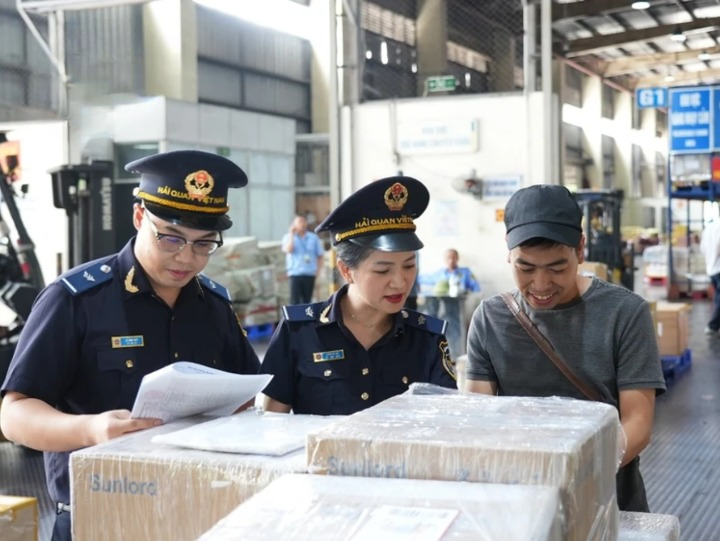
Importers can protect their delivery schedules by applying several proven operational practices:
First, register your inspection dossier before the ocean container arrives at the harbor. Early registration gives testing agencies time to assign inspection teams promptly upon vessel discharge.
Second, ensure that inner product packaging features compliant Vietnamese sub-labels (Nhãn phụ). Sub-labels must state commodity names, manufacturer origins, and importer information accurately.
Third, confirm whether your product qualifies for reduced inspection schemes. Importers who maintain clean compliance histories often qualify for simplified document-only reviews.
Finally, partner with experienced customs brokerage specialists. Professional customs brokers manage laboratory bookings, coordinate sample collections, and track ministerial endorsements smoothly.
Frequently Asked Questions (FAQ)
Can I sell imported goods before specialized inspection completes?
No. Moving goods to a private warehouse serves storage and testing purposes only. Distributing or selling products before final customs release triggers severe financial fines and license revocations.
How long does the specialized inspection process take?
Standard document inspections take between one and three business days. However, complex laboratory testing for electrical safety or chemical composition can require five to seven days.
What happens if an imported shipment fails specialized inspection?
If goods fail mandatory tests, authorities require re-testing, mandatory product re-labeling, or technical remediation. If products cannot meet safety standards, customs mandates forced re-export or cargo destruction.
Mastering the specialized inspection registration process eliminates border delays and keeps your commercial supply chain predictable. Contact our customs brokerage desk today for professional support with product registrations, laboratory testing, and seamless import clearances!
Read more:
Surrendered B/L, Switch Bill, and Seaway Bill: Definitions, Differences, and Use Cases
Vận Chuyển Bánh Trung Thu Hỏa Tốc Bằng Đường Hàng Không
