Table of Contents
What Is Ship Draft in Maritime Logistics?
In maritime transportation, ship draft, also spelled ship draught, is one of the most important technical parameters used to determine whether a vessel can safely navigate a particular waterway or enter a port.
Simply put, a ship’s draft is the vertical distance between the waterline and the lowest point of the vessel’s hull. The deeper a vessel sits in the water, the greater its draft. According to maritime guidance, draft can be measured at different points of a vessel, including the forward, middle and aft sections.
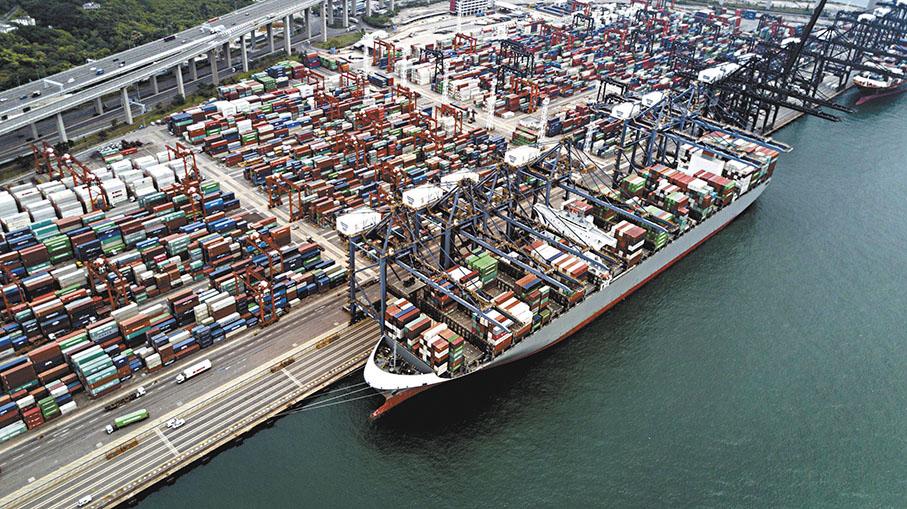
For example, a heavily loaded container ship will generally have a deeper draft than the same vessel when it is carrying less cargo. This is because additional cargo increases the vessel’s displacement and causes the hull to sit deeper in the water.
Draft is therefore closely connected with cargo loading, vessel safety, fuel efficiency and port accessibility.

Why Is Ship Draft Important?
Draft is particularly important because ports and navigation channels have limited water depths.
A vessel may have sufficient length and width to enter a port, but that does not necessarily mean it can safely reach the berth. If the vessel’s draft is greater than the available navigable depth, there may not be enough water beneath the hull.
This distance between the bottom of the vessel and the seabed is known as Under Keel Clearance (UKC).
PIANC identifies adequate under-keel clearance as an important safety consideration for vessels navigating port areas. Ports must balance available water depth, dredging requirements, vessel draft and safe navigation conditions.
In practical logistics operations, this means that a port may impose a maximum allowable draft for vessels entering a particular channel, turning basin or berth.
How Does Draft Affect a Vessel’s Ability to Enter a Port?
There are several reasons why draft can determine whether a vessel is able to enter or berth at a port.
1. Water Depth Limits
The most obvious factor is the depth of the navigation channel.
Imagine a vessel with a draft of 11 metres approaching a channel with insufficient navigable depth. Even if the port has modern cranes and a suitable berth, the vessel may have to wait, reduce its cargo load or use another port.
IMO port data guidance also notes that berth accessibility can be restricted by physical characteristics such as water depth, vessel length and beam.
2. Under-Keel Clearance Must Be Maintained
A vessel cannot simply enter a port because its draft is slightly less than the charted water depth.
A safety margin is normally required between the vessel’s keel and the seabed. This is the under-keel clearance.
The required clearance can be affected by vessel movement, channel characteristics, water density, tides, waves and other environmental conditions. PIANC highlights under-keel clearance as a key factor in determining safe vessel access.
For logistics operators, this is why a vessel’s nominal draft should not be considered in isolation. Actual operating conditions must also be evaluated.
3. Tides Can Change Port Accessibility
Tidal conditions can make a significant difference to vessel access.
At high tide, the available water depth may increase, allowing a deeper-draft vessel to navigate a channel. At low tide, the same vessel may face restrictions.
Some ports therefore operate tidal windows, allowing certain vessels to enter or leave only during periods when sufficient water depth is available.
IMO notes that reliable information on port depth and tidal height is important for optimizing ship draft and calculating under-keel clearance.
This is especially important for large vessels calling at ports where the approach channel or berth has limited depth.
What Factors Can Change a Vessel’s Actual Draft?
A vessel’s draft is not always constant throughout a voyage.
Cargo Loading
More cargo generally means greater displacement and a deeper draft. Cargo planners must therefore consider the draft restrictions of both the loading and destination ports.
Water Density
A ship floats differently in seawater and freshwater because water density varies.
IMO notes that water density can vary significantly between areas, including between seawater near a harbour entrance and lower-density freshwater further inland.
This is one reason why draft calculations need to consider the actual operating environment.
Trim
A vessel’s trim refers to the difference between its forward and aft drafts.
Poor cargo distribution can cause a vessel to sit deeper at the bow or stern. Proper trim and draft optimization can improve vessel performance and reduce resistance.
According to IMO’s GreenVoyage2050 guidance, optimizing trim and draft can reduce resistance, fuel consumption and emissions.

Waves and Vessel Movement
A vessel does not remain completely stationary in the water while navigating.
Wave-induced motion, squat and other dynamic effects can reduce the effective clearance beneath the hull. In some port approaches, these factors can become particularly important for large vessels.
Therefore, a vessel that appears to have sufficient static clearance may still require additional safety margins during navigation.
What Happens If a Vessel’s Draft Is Too Deep?
If a vessel’s draft exceeds the safe limit for a port or channel, several operational solutions may be considered.
The vessel may need to:
- Wait for a suitable tide.
- Reduce its cargo load.
- Adjust ballast.
- Use a deeper navigation channel.
- Call at another suitable port.
- Coordinate with pilots and port authorities for an appropriate arrival window.
These decisions can directly affect shipping schedules, cargo planning, port operations and logistics costs.
For example, if a container vessel cannot enter a shallow port at the planned time, containers may need to be discharged at another port and transported onward by feeder vessel, truck, rail or other modes. This can add handling steps and potentially increase transit time.
Why Draft Matters to Logistics Planning
For freight forwarders, shippers and logistics companies, understanding vessel draft is more than a technical maritime issue.
Draft can influence:
Port selection: A vessel must be compatible with the depth and restrictions of the destination port.
Cargo planning: Cargo weight and distribution affect the vessel’s draft and trim.
Schedule planning: Tidal windows and channel restrictions can influence arrival and departure times.
Cost management: Draft restrictions can lead to additional transshipment, feeder services or inland transportation.
Safety: Maintaining adequate under-keel clearance helps reduce the risk of grounding.
As vessels become larger and ports handle increasingly high cargo volumes, coordination between ship operators, terminals, pilots and port authorities becomes increasingly important.
For readers interested in international shipping and logistics services, you can also explore other international express and shipping-related information here:
/vinalines.net/van-tai-bien-hat-dinh-duong-tu-cang-hai-phong-den-cang-keppel-wharves/
Draft and Port Access: A Simple Example
Consider a container vessel with a draft of approximately 10 metres.
If the available navigable depth at a port is only marginally greater than 10 metres, the vessel may not automatically be permitted to enter. The port and vessel operator must consider the required under-keel clearance, tide, water density, vessel movement and other operational factors.
If conditions are unfavorable, the vessel may have to wait for a higher tide or reduce its draft.
This simple example shows why ship draft is directly connected to the practical accessibility of ports.
Conclusion
Ship draft, or vessel draught, is a fundamental concept in maritime logistics. It describes how deeply a vessel sits in the water and plays an important role in determining whether the vessel can safely navigate a channel and reach a berth.
A vessel’s draft must be considered together with water depth, under-keel clearance, tides, water density, trim, vessel movement and port restrictions.
For logistics professionals, understanding these factors helps improve cargo planning, port selection and shipment scheduling. It also explains why a vessel may sometimes be unable to enter a port even when the port appears large enough to handle the ship.
As international maritime transportation continues to rely on larger and more efficient vessels, accurate draft management and reliable port data will remain essential for safe, efficient and cost-effective logistics operations.
Related reading: If you want to understand what happens to a container after it leaves the port and how cargo continues through the logistics chain, read:
Where Does a Container Go After Leaving the Port?
