Table of Contents
Sea Freight vs Road Transport in Vietnam: North-South Cost Comparison
The North-South economic corridor forms the backbone of domestic commerce in Vietnam. Every day, thousands of tons of cargo move between the northern industrial hubs and southern manufacturing centers.
However, choosing the right transport mode remains a major challenge for supply chain managers. Specifically, businesses must constantly balance transit speed against total shipping expenditures.
Understanding the difference between sea freight vs road transport in Vietnam enables smarter logistics planning. Furthermore, selecting the most suitable model directly improves your operational profit margins.
1. Overview of the North-South Freight Corridor
The trade route connecting Hanoi and Haiphong in the north with Ho Chi Minh City, Binh Duong, and Dong Nai in the south spans roughly 1,700 kilometers.
Traditionally, businesses relied heavily on road trucking via National Route 1A and the North-South Expressway. Meanwhile, domestic coastal container shipping has developed rapidly into a reliable alternative.
Both transport modes offer distinct advantages depending on your delivery deadlines, shipment volume, and budget limits.

2. In-Depth Cost Comparison: Sea Freight vs Road Transport
Transportation cost represents the primary decision factor for most domestic shippers:
Direct Freight Rates
Coastal sea freight provides a massive cost advantage over long-haul highway trucking. On average, shipping full container loads (FCL) by sea is 30% to 50% cheaper than road transport.
For example, trucking a 40ft container across 1,700 km requires substantial fuel consumption, continuous driver labor, and multiple highway toll payments. In contrast, a single container vessel carries hundreds of boxes simultaneously, lowering the cost per ton dramatically.
Accessorial Surcharges
Road trucking quotes generally include driver costs, fuel surcharges, and highway toll fees upfront. Consequently, road freight presents a predictable, single-line pricing structure with few unexpected charges.
Conversely, domestic sea shipping involves terminal handling charges (THC), lift-on/lift-off (LoLo) fees, and local drayage at both ends. Even after adding these terminal expenses, sea freight still delivers major net savings for medium-to-large cargo volumes.
3. Transit Time and Delivery Reliability
While maritime transport wins on pricing, highway trucking delivers superior speed:
Road Trucking Transit Speed
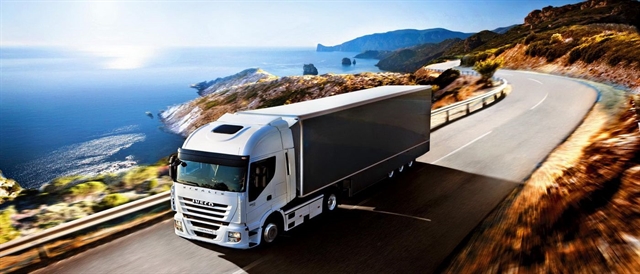
Long-haul trucks complete the journey between northern and southern warehouses within 48 to 60 hours.
Furthermore, road freight offers point-to-point flexibility without terminal cut-off schedules. Therefore, trucking remains the undisputed choice for emergency orders, high-value electronics, and perishable goods.
Coastal Sea Shipping Transit Time
Domestic vessels sailing between Haiphong Port and Cat Lai Port typically take 3 to 4 days port-to-port.
However, total door-to-door transit usually requires 5 to 7 days. This timeline includes container packing, port terminal gating, vessel sailing, and final inland delivery.
In addition, seasonal monsoons and tropical typhoons during late summer can cause temporary sailing delays.
4. Payload Capacity and Cargo Safety
Comparing capacity and cargo handling reveals important operational differences:
-
Payload Weight Limits: Highway authorities strictly enforce gross vehicle weight limits on national bridges and roads. Conversely, ocean containers easily accept dense payloads up to 26 to 28 metric tons per unit.
-
Volume Handling: Container vessels effortlessly move dozens of containers for high-volume commodity shipments in a single booking.
-
Cargo Protection: Heavy marine containers protect goods against rough road vibrations, highway accidents, and cargo pilferage.
-
Environmental Impact: Coastal vessels generate substantially lower carbon emissions per ton-kilometer than highway truck fleets, helping companies fulfill green sustainability targets.
5. Summary Comparison Matrix
The table below highlights the operational trade-offs between both transportation methods:
| Feature / Metric | Domestic Coastal Sea Freight | Long-Haul Road Trucking |
| Average Cost | Low (30% to 50% savings) | High (Driven by fuel & tolls) |
| Door-to-Door Transit Time | 5 to 7 business days | 2 to 3 business days (48–60 hrs) |
| Schedule Flexibility | Fixed weekly sailing loops (2–3/week) | Daily departures on demand |
| Payload Capacity | Massive volume (Up to 28 tons/box) | Limited by highway axle weight limits |
| Optimal Cargo Type | Bulk goods, heavy machinery, consumer staples | Urgent deliveries, perishables, express freight |
| Environmental Footprint | Low emissions per ton | High emissions per vehicle |
6. Which Solution Saves More Money for Your Business?
Choosing the optimal logistics solution depends entirely on your product characteristics and supply schedule:
Choose Domestic Sea Freight When:
-
You move heavy, bulky cargo such as animal feed, ceramic tiles, cement, steel, or industrial chemicals.
-
Your supply chain operates on planned manufacturing schedules with sufficient inventory safety stock.
-
You need to transport large volumes exceeding several container loads per shipment.
-
Your primary objective is cutting logistics expenditures to maintain competitive product pricing.
Choose Road Trucking When:
-
Your customer requires guaranteed delivery within 48 to 72 hours.
-
You ship high-value components, sensitive pharmaceuticals, or short-shelf-life agricultural produce.
-
Your production line faces an urgent stockout and cannot wait for vessel cut-off schedules.
-
Your delivery destination lies deep inland far away from commercial container terminals.
Frequently Asked Questions (FAQ)
What documentation is required for domestic sea freight in Vietnam?
Domestic shipping requires standard transport documents, including the Domestic Waybill (or booking note), delivery orders, and internal stock transfer notes or VAT sales invoices to accompany cargo in transit.
Can I ship Less than Container Load (LCL) by sea from Hanoi to Ho Chi Minh City?
Yes. Freight forwarders operate regular domestic LCL consolidation services between northern and southern CFS warehouses for shipments measuring from 1 to 15 cubic meters.
How do seasonal typhoons affect domestic sea shipping schedules?
Severe tropical storms occasionally halt port operations for 24 to 48 hours. Logistics providers closely track maritime weather advisories to reroute vessels and keep shippers informed of revised arrival times.
Read more:
How to Apply for a Phytosanitary Certificate for Export Goods: The Definitive Guide
What preparations are needed to ship dried seafood from Hai Phong to France?
