Table of Contents
Logistics Knowledge: How Does a Shipment Move Through the Supply Chain?
Logistics is an essential part of modern business and international trade. Every product that reaches a customer must move through a series of activities, from cargo preparation and warehousing to transportation, customs clearance, and final delivery.
Understanding how logistics works can help businesses control transportation costs, reduce delays, improve inventory management, and provide better customer service. Whether a shipment moves by road, air, rail, or sea, each stage requires careful planning and coordination.

What Is Logistics?
Logistics refers to the planning, implementation, and control of the movement and storage of goods from the point of origin to the final destination.
A logistics process can involve several activities, including:
- Cargo transportation
- Warehousing
- Inventory management
- Packaging
- Order processing
- Customs clearance
- Cargo handling
- Shipment tracking
- Final delivery
These activities are connected. A delay in one stage can affect the following stages and eventually impact the delivery schedule.
How Does the Logistics Process Work?
Although every shipment can have different requirements, a typical logistics process includes several important steps.
1. Cargo Preparation
The first step is to prepare the goods for transportation. Businesses need to identify the type of cargo, quantity, weight, dimensions, value, origin, and destination.
Proper packaging is also important. Goods should be packed according to their characteristics and transportation method. Fragile products may require additional protection, while large or heavy cargo may need special handling.
Accurate shipment information also helps logistics providers calculate transportation costs and select suitable equipment.
2. Warehousing and Inventory Management
After preparation, goods may be stored in a warehouse before transportation.
Warehousing is not simply about keeping products in one location. It also involves receiving goods, checking quantities, organizing inventory, picking orders, packing shipments, and preparing cargo for dispatch.
Effective inventory management helps businesses avoid both overstocking and stock shortages. It also allows logistics teams to know where goods are located and when they need to be moved.
3. Choosing the Right Transportation Method
Transportation is one of the most important components of logistics.
Businesses can choose different transportation modes depending on cargo characteristics, distance, delivery time, and budget.
Road transportation offers flexibility and is widely used for domestic deliveries and short-distance transportation.
Rail transportation is suitable for large volumes of cargo and long-distance routes where stable transportation capacity is required.
Sea freight is commonly used for international trade, especially for large or heavy shipments. It can handle high cargo volumes and is often suitable for businesses that can plan their shipments in advance.
Air freight provides faster transportation and is often selected for urgent, high-value, or time-sensitive goods.
In many cases, businesses combine different transportation methods to create a multimodal logistics solution.
4. Domestic Transportation and Container Haulage
For international sea freight, transportation does not end when a container reaches the port. The container may still need to move between the port, warehouse, factory, distribution center, and final destination.
Two common approaches are Carrier Haulage and Merchant Haulage. Carrier Haulage means the shipping carrier arranges the inland transportation, while Merchant Haulage means the shipper or consignee arranges transportation through a local trucking provider.
Understanding these two models can help businesses better manage inland transportation, costs, responsibilities, and container return schedules. For more information, see Vinalines’ article “Carrier Haulage and Merchant Haulage”.

5. Customs Clearance
For international shipments, customs clearance is another important stage.
The required documents can vary depending on the cargo, origin, destination, and applicable regulations. Common documents may include commercial invoices, packing lists, bills of lading, certificates of origin, and other supporting documents.
Incorrect or incomplete information can cause delays, additional costs, or difficulties during the customs process.
For this reason, businesses should prepare documents carefully and check the import and export requirements before shipping.
6. Port Handling and Sea Freight
When cargo is transported by sea, the port becomes an important connection point in the logistics chain.
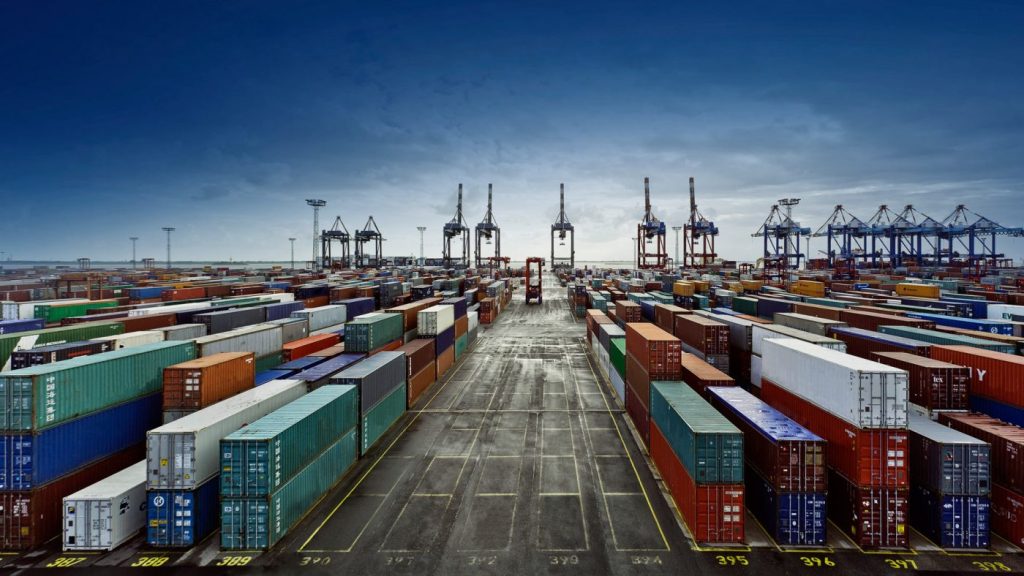
A typical container shipment may move from a factory or warehouse to an inland terminal or port. After the necessary procedures are completed, the container is loaded onto a vessel.
The vessel then transports the container to the destination port. Once it arrives, the container may go through unloading, customs procedures, terminal handling, and inland transportation before reaching the consignee.
This process shows why sea freight is not simply a journey from one port to another. It involves multiple logistics activities and different parties working together. https://vinalines.net/carrier-haulage-va-merchant-haulage-la-gi-doanh-nghiep-nen-chon-hinh-thuc-van-chuyen-noi-dia-nao/?
7. Shipment Tracking
Shipment tracking allows businesses and customers to monitor cargo movement.
Modern logistics systems can provide information about pickup, departure, arrival at terminals, customs status, and final delivery.
Tracking is particularly useful for international shipments because transportation may involve multiple locations and service providers.
Real-time or regularly updated tracking information can also help logistics teams respond more quickly when unexpected delays occur.
8. Last-Mile Delivery
The final stage is last-mile delivery. This is the movement of goods from a warehouse, distribution center, terminal, or local hub to the final customer.
Last-mile delivery can be challenging because it often involves many individual destinations. Traffic conditions, delivery addresses, customer availability, and local regulations can all affect performance.
For businesses selling products online, last-mile delivery is especially important because it directly affects the customer’s experience.
How Can Businesses Improve Logistics Efficiency?
Businesses can improve logistics performance by focusing on several key areas.
Accurate Shipment Information
Incorrect information about weight, dimensions, addresses, or cargo descriptions can lead to additional costs and delays.
Better Transportation Planning
Businesses should compare transportation options based on cost, delivery time, cargo type, and route requirements.
Efficient Warehouse Operations
Organized storage, accurate inventory records, and efficient picking and packing processes can reduce unnecessary handling time.
Digital Tracking
Tracking systems provide better visibility throughout the shipment journey and allow businesses to respond to problems more quickly.
Cooperation With Logistics Partners
Working with reliable carriers, freight forwarders, trucking companies, and warehouse operators can help businesses coordinate different stages of the supply chain.
Why Is Logistics Knowledge Important?
Logistics knowledge is useful not only for logistics companies but also for manufacturers, exporters, importers, retailers, and online businesses.
When businesses understand how goods move through the supply chain, they can make better decisions about transportation methods, inventory levels, packaging, documentation, and delivery schedules.
A good understanding of logistics can also help businesses identify potential bottlenecks and improve the overall flow of goods. https://vietship.net/en/where-does-a-container-go-after-leaving-the-port.html/
Conclusion
Logistics is a connected process that involves much more than transporting goods from one location to another. From cargo preparation and warehousing to transportation, customs clearance, port handling, tracking, and final delivery, every stage contributes to the performance of the supply chain.
For businesses involved in domestic and international trade, understanding these logistics processes can help improve efficiency, control costs, reduce risks, and provide more reliable delivery services.
The journey of a container is a good example of how different logistics activities work together. To learn more about what happens after a container leaves the port, read “Where Does a Container Go After Leaving the Port?” on Vietship.
