
Table of Contents
Can You Cancel a Customs Declaration After Registration in Vietnam? Regulations & Procedures
Entering inaccurate data on an electronic customs declaration is a common challenge for trade businesses. A simple typographical mistake, incorrect HS code, or unexpected shipment cancellation can create significant operational issues.
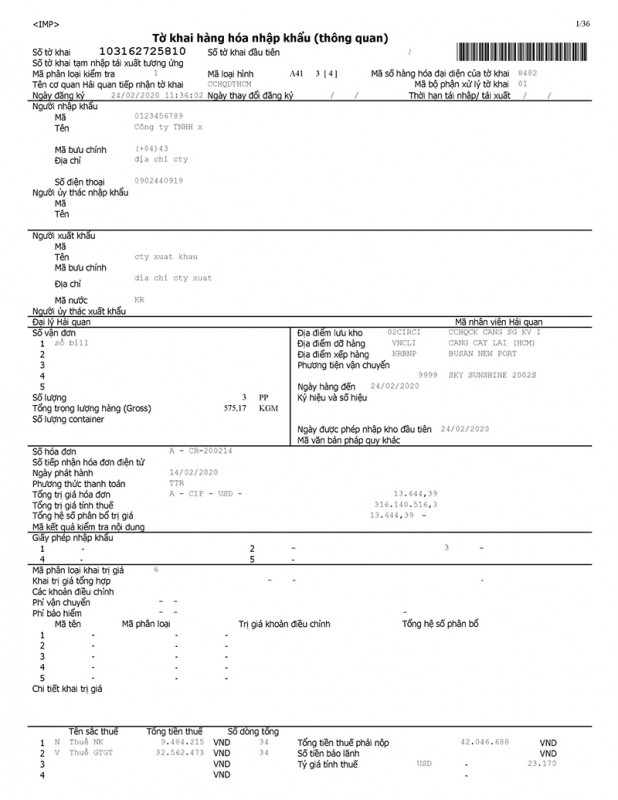
Once a declarant officially registers an Information Distribution Clearance (IDC) transaction on the VNACCS/VCIS platform, the system generates an official declaration number. At this point, many declarants wonder whether they can simply erase the submission.
Under Vietnamese customs law, you can indeed cancel a customs declaration after registration. However, customs authorities permit cancellation only under strict statutory conditions and via formal electronic procedures.
1. Legal Basis for Declaration Cancellation
Customs declaration cancellations operate strictly within Vietnam’s formal customs framework:
-
Law on Customs No. 54/2014/QH13: Establishes the foundational legal rights and obligations of customs declarants.
-
Circular No. 38/2015/TT-BTC (Article 22): Sets the base operational rules for registering, amending, and canceling declarations.
-
Circular No. 39/2018/TT-BTC (Amending Article 22): Introduces detailed guidelines, electronic forms, and modern administrative protocols for declaration cancellations.
Therefore, cancellation is not an automatic unilateral action by the trader. The supervising customs branch must verify the documentation and issue formal approval.
2. Statutory Cases Eligible for Declaration Cancellation
Article 22 of Circular 38/2015/TT-BTC (amended by Circular 39/2018/TT-BTC) outlines five specific circumstances permitting cancellation:
Case 1: Expiration Beyond the Statutory Clearance Window
Customs authorities cancel the declaration automatically or upon request when the process exceeds statutory limits:
-
For Export Cargo: After 15 consecutive days from the official registration date, the exporter fails to present physical goods at the customs inspection point.
-
For Import Cargo: After 15 consecutive days from the registration date, the importer fails to present the required documentary dossier (for Yellow Channel) or fails to present cargo for inspection (for Red Channel).
Case 2: Accidental Duplicate Registrations
Network latency or system glitches occasionally cause a declarant to transmit identical shipment information twice. Consequently, the VNACCS system generates multiple declaration numbers for a single shipment.
Under these conditions, customs officers permit the cancellation of the duplicated declaration number while processing the primary entry.
Case 3: Rejection or Cancellation of the Commercial Contract
Commercial conditions sometimes force trade partners to terminate contracts unexpectedly:
-
The foreign buyer cancels the purchase order before the cargo arrives or clears the port.
-
The overseas shipping line loses or damages the shipment during international maritime transit.
-
The supplier ships completely incorrect items, requiring the vessel to divert or return the cargo before customs release.
Case 4: Misdeclaration of Non-Amendable System Data Fields
The VNACCS system strictly forbids direct amendments to certain critical data fields once registered:
-
Declarant tax identification code (Mã số thuế).
-
Customs declaration type code (Mã loại hình).
-
Supervising customs sub-department code (Mã chi cục hải quan).
If you misdeclare any of these locked parameters, you must submit a formal request to cancel the entire declaration and re-register a new one.
Case 5: Re-Export or Re-Import Consignments Under Special Decrees
Goods entering temporary storage, exhibition events, or repair facilities that undergo altered operational routing qualify for structured declaration cancellation.
3. Circumstances Where Cancellation Is Strictly Prohibited

Customs regulations strictly prohibit declarants from canceling declarations to evade administrative fines or legal liabilities:
First, customs branches deny cancellation requests once the system routes a declaration to the Red Channel and flags it for physical examination. Declarants cannot request cancellation simply to avoid physical scrutiny of questionable goods.
Second, if customs authorities initiate an administrative penalty investigation for smuggling, trade fraud, or tax evasion, cancellation remains frozen until investigators conclude the case.
Finally, you cannot cancel a declaration after completing customs clearance (Thông quan) or obtaining cargo release, except in very narrow post-clearance audit scenarios directed by customs leadership.
4. Step-by-Step Cancellation Workflow on the VNACCS System
Executing a declaration cancellation requires a synchronized digital and administrative process:
Step 1: Electronic Cancellation Filing via VNACCS
The declarant logs into the customs software using a registered corporate digital signature (USB Token).
Next, the declarant transmits electronic form Form No. 04/HUYTK/GSQL (Application for Customs Declaration Cancellation). The form details the specific reason for cancellation, the active declaration number, and relevant supporting commercial evidence.
Step 2: Preparing and Submitting the Physical Dossier
Within the statutory response window, the declarant submits supporting evidentiary documents to the supervising customs sub-department:
-
Written explanation letter detailing the operational or clerical root cause.
-
Commercial Contract, Invoices, and Packing Lists confirming transaction details.
-
Carrier written confirmation (such as a notice of rolled cargo, cargo loss, or booking cancellation).
-
Inward/Outward warehouse receipts proving goods never entered the terminal.
Step 3: Customs Examination and Adjudication
The designated customs officer reviews the application against electronic system logs:
-
If the dossier is incomplete, the officer issues a formal electronic deficiency notice within 08 working hours.
-
If the justification satisfies regulatory criteria, the Head of the Customs Sub-Department signs and approves the cancellation on the VNACCS core system.
Once approved, the status on the National Single Window updates to “Cancelled” (Đã hủy), releasing system holds on linked transport documents.
5. Overview: Declaration Modification vs. Cancellation
Before requesting a full cancellation, verify whether an electronic amendment suffices:
| Criteria | Declaration Amendment (Khai bổ sung) | Declaration Cancellation (Hủy tờ khai) |
| Applicable Stage | Before or after clearance | Strictly before customs clearance |
| Data Fields | Quantities, unit values, basic container marks | Type codes (Mã loại hình), Tax IDs, Customs codes |
| System Outcome | Keeps the active declaration number | Terminates the declaration number entirely |
| Timeframe | Resolved within 02 to 04 hours | Typically takes 01 to 03 working days |
| Administrative Risk | Low to moderate (if handled proactively) | Higher administrative scrutiny from authorities |
6. Practical Tips to Prevent Declaration Cancellation Errors
Declarants can maintain high compliance scores by implementing four practical operational habits:
First, audit transaction details thoroughly on preliminary draft IDA forms before submitting the final IDC registration command. Checking the declaration type code (such as A11, A12, or E21) prevents fundamental clerical errors.
Second, confirm vessel berthing manifests on the National Single Window before filing. Transmitting declarations before carriers submit inward manifests creates unlinked system data.
Third, maintain written cancellation notices from ocean carriers and overseas buyers. Official supplier correspondence serves as primary evidence when justifying contract terminations to customs officers.
Finally, resolve duplicate declarations immediately. Leaving abandoned declarations active in the system triggers automated non-compliance penalty flags during annual enterprise risk assessments.
Frequently Asked Questions (FAQ)
Does canceling a customs declaration incur an administrative fine?
Canceling a declaration due to carrier delays or contractual cancellations does not carry fines. However, if cancellation stems from fraudulent clerical errors, customs may impose administrative penalties under Decree 128/2020/ND-CP.
What happens to previously paid import duties when a declaration is canceled?
If you already settled taxes on a canceled declaration, you can submit an official tax refund application or request an offset against future tax obligations.
How long does the customs branch take to process a cancellation request?
Customs officers typically review and process a valid electronic cancellation application within 08 to 24 working hours upon receiving a complete evidentiary dossier.
Navigating the procedure to cancel a customs declaration after registration demands thorough regulatory knowledge and rapid clerical execution. Contact our customs compliance team today to review your shipment dossiers, resolve declaration discrepancies, and ensure smooth clearance across all Vietnamese customs checkpoints!
Read more:
Import Customs Clearance Process in Vietnam: The Definitive Step-by-Step Guide
Dịch vụ chuyển phát nhanh chứng từ, bưu phẩm từ Hà Nội đi Áo, châu Âu
