
Table of Contents
Delayed Container Pickup: Who Is Liable for Additional Incurred Costs?
In international ocean freight, timing dictates operational cost efficiency. A container moves through a finely calibrated chain of shipping lines, marine terminals, customs brokers, and drayage truckers.
However, unexpected delays frequently disrupt scheduled equipment pickups. A consignee may fail to collect an import box on time, or an exporter might miss the scheduled depot release window.
When delays occur, substantial penalty fees accrue daily. Determining liability for delayed container pickup additional costs depends on contractual terms, underlying root causes, and designated Incoterms.
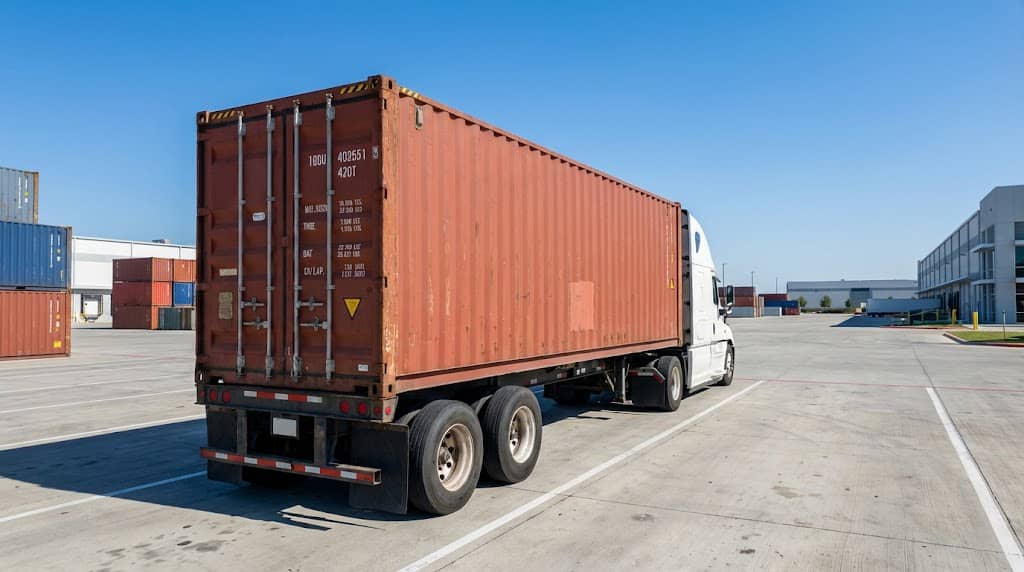
1. Typical Costs Incurred Due to Delayed Container Pickups
When a container sits idle beyond its scheduled timeline, several distinct charges begin to accumulate:
-
Demurrage (DEM): Billed by the ocean carrier when an import container remains inside the port terminal yard past the agreed free time.
-
Port Storage Charges: Invoiced by the terminal operator for the physical footprint the container occupies on the dock or yard stack.
-
Container Detention (DET): Assessed when an empty export container is picked up too early and held at a shipper’s premises past the allowable window, or when an import box is kept outside the port too long.
-
Trucking Waiting Fees & Dry Runs (Lưu ca / Rớt chuyến): Charged by drayage haulers when drivers wait hours at congested gates or make aborted trips due to paperwork holds.
-
Cargo Shifting & Re-Inspection Fees: Charged by terminal stevedores if boxes must be unstacked or moved to customs inspection yards.
2. Who Bears the Financial Liability? Scenario Analysis
Determining who pays depends directly on who caused the operational failure:
Scenario A: Delays Caused by the Consignee (Buyer)
The buyer bears full financial liability if the delay stems from internal import issues:
-
Late Customs Clearance: The importer submits declarations late or fails to resolve tariff audits on time.
-
Payment Delays: The buyer delays settling commercial invoices, failing to release the original Bill of Lading or electronic Delivery Order (e-DO).
-
Warehouse Unreadiness: The receiving warehouse lacks physical space or labor to accept incoming containers.
Under these circumstances, the consignee must absorb all demurrage, port storage, and hauler waiting surcharges.
Scenario B: Delays Caused by the Shipper (Seller)
The exporter is financially responsible when origin mistakes halt destination operations:
-
Mismatched Documentation: Typographical discrepancies on the Commercial Invoice or Packing List prompt customs officers to halt clearance.
-
Missing Mandatory Certificates: The seller neglects to provide necessary documents, such as a Phytosanitary Certificate, Certificate of Origin, or MSDS.
-
Late SI Submission: Delays in submitting Shipping Instructions prevent timely manifest filing with destination customs.
Here, the buyer can file a formal commercial claim against the seller to recover all incurred port penalties.
Scenario C: Delays Caused by the Ocean Carrier or Terminal
Carriers and terminal operators occasionally trigger pickup bottlenecks:
-
Terminal System Outages: Cyber disruptions, IT server failures, or automated gate shutdowns prevent truckers from generating equipment receipts.
-
Port Yard Congestion & Rolled Cargo: Excessive congestion traps the container deep inside a high yard stack, making physical retrieval impossible.
-
Late Inward Manifest Transmission: The shipping line fails to submit the import manifest to customs on time, blocking cargo release.
In such cases, shippers or forwarders can demand official fee waivers (dispute claims) from the carrier or terminal authority.
Scenario D: Delays Caused by the Drayage Trucker or Freight Forwarder
If an appointed logistics provider fails to dispatch drivers according to the agreed schedule:
-
The trucking company faces mechanical breakdowns and fails to assign replacement tractors before free time expires.
-
The forwarder misplaces original shipping documents or forgets to settle local port handling advances on e-Port.
The service contract holds the logistics service provider liable for the resulting storage and demurrage bills.
3. How Incoterms 2020 Define Risk and Cost Transfer
International Commercial Terms (Incoterms) govern the exact point where cost obligations pass between buyer and seller:
| Incoterms Rule | Risk & Cost Transfer Point | Who Pays for Destination Pickup Delays? |
| EXW (Ex Works) | Seller’s factory/warehouse floor | Buyer (Consignee) bears 100% of all transit and destination delays. |
| FOB (Free on Board) | Once loaded onboard the vessel at origin port | Buyer (Consignee) is responsible for destination demurrage and drayage. |
| CFR / CIF | Risk transfers at origin vessel; cost transfers at destination port | Buyer (Consignee) pays destination demurrage, unless caused by seller’s document flaws. |
| DAP (Delivered at Place) | Delivered to named destination place, ready for unloading | Seller (Shipper) pays all transport costs; Buyer pays delays caused by slow import clearance. |
| DDP (Delivered Duty Paid) | Delivered cleared for import at buyer’s facility | Seller (Shipper) bears primary responsibility for end-to-end transport delays. |
4. Operational Checklist to Prevent Pickup Delays
Shippers can prevent expensive fee disputes by implementing four rigorous management disciplines:
First, audit all commercial documents before vessel arrival. Ensuring that container numbers, seal tags, and HS codes match across all paperwork prevents customs red-channel holds.
Second, negotiate extended combined free time upfront. Securing 14 to 21 days of combined DEM/DET during freight booking creates a safety buffer against unexpected port delays.
Third, leverage digital e-Port and electronic Delivery Orders (e-DO). Settle terminal lift fees and register equipment receipts digitally to eliminate driver processing queues at port gates.
Finally, establish a transparent communication protocol with your drayage partners. Require haulers to log exact gate arrival times, driver coordinates, and terminal rejection slips in real time.
5. How to File and Settle Fee Disputes
When unfair detention or storage charges arise, handle the claim systematically:
-
Gather Objective Evidence: Compile timestamped GPS logs, terminal gate-in records, customs system receipts, and written depot rejection notes.
-
Submit a Written Dispute Promptly: Present your documentation directly to the carrier’s dispute desk before paying the invoice, citing specific operational failures.
-
Review Force Majeure Clauses: If severe weather, typhoons, or government strikes caused the delay, invoke force majeure provisions to waive statutory penalties.
Frequently Asked Questions (FAQ)
Does the carrier demurrage clock stop during customs physical inspections?
No. Standard ocean carrier tariffs state that demurrage continues to accrue during customs inspections unless an official customs seizure order is issued.
Can a freight forwarder be held liable for demurrage fees?
Yes, if the delay resulted directly from the forwarder’s operational negligence, such as losing physical bills of lading or failing to dispatch trucks on agreed dates.
What should a trucker do if an empty container return depot is full?
The driver should request an official written rejection slip from the depot gate, photograph the queue, and notify the carrier immediately to designate an alternative return depot.
Resolving liability for delayed container pickup additional costs requires clear service contracts, meticulous documentation, and proactive logistics partners. Contact our shipping operations desk today to optimize your container movements, secure extended free time, and protect your supply chain from unexpected terminal surcharges!
Read more:
Professional Timber Import Services from Canada to Vietnam: Regulatory Guide and Sea Freight
Dịch vụ giao hàng hỏa tốc từ Ý (Italy) về Việt Nam uy tín, nhanh chóng
