Table of Contents
Ho Chi Minh City Prioritizes High-Tech and Logistics Cooperation with South Korea
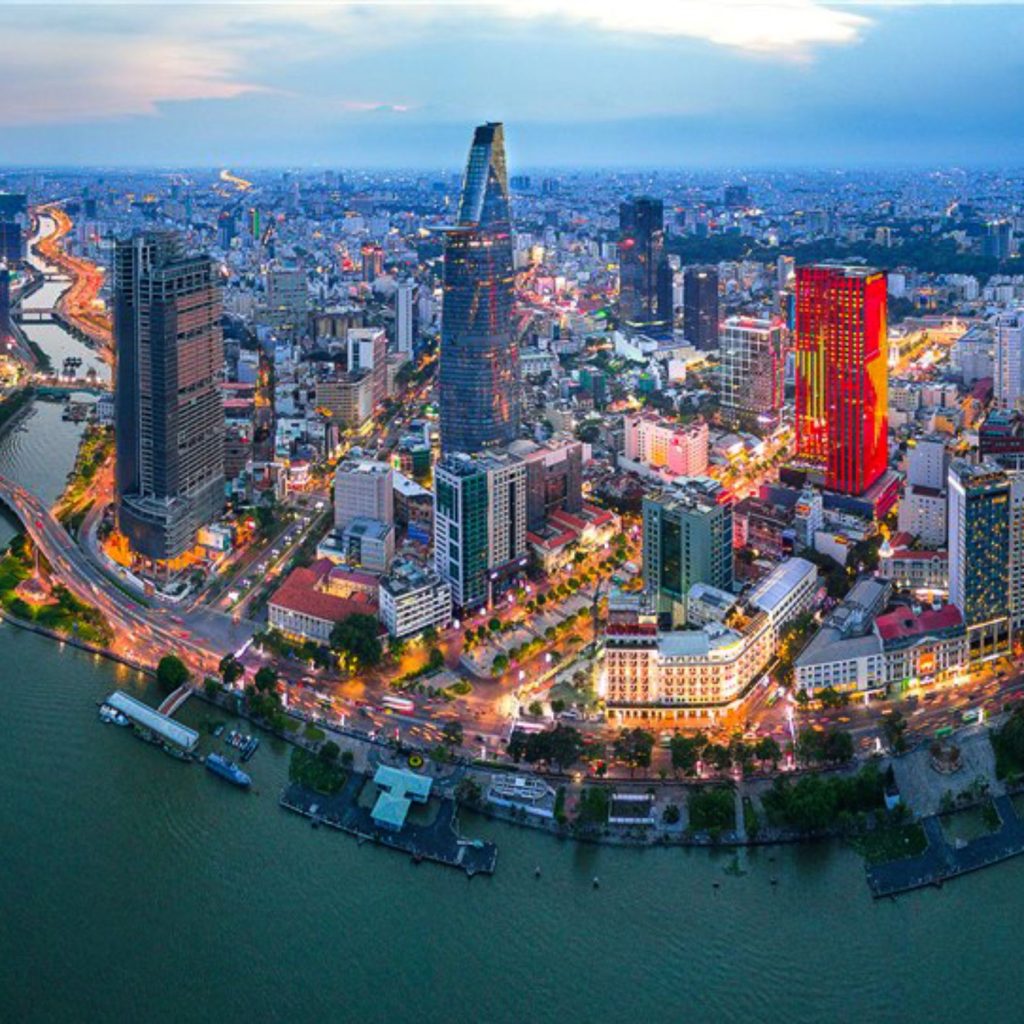
Ho Chi Minh City serves as Vietnam’s primary economic engine, commercial powerhouse, and southern logistics gateway. The city drives national modernization through rapid digital transformation and sustainable industrial expansion.
Concurrently, South Korea stands as one of the largest foreign direct investors in Vietnam. Korean corporations contribute billions of dollars across electronics manufacturing, heavy industrial processing, commercial retail, and international maritime trade.
During the annual dialogue between municipal leaders and the South Korean business community, the city reaffirmed its strategic direction. The municipal government officially announced that it prioritizes HCMC high-tech and logistics partnerships with South Korea. Furthermore, city authorities unveiled new investment incentives, extensive land portfolios, and administrative reforms designed to attract top-tier Korean capital.

1. South Korea: A Pillar Investor in Ho Chi Minh City
South Korea maintains a commanding presence within the southern metropolitan business ecosystem:
Currently, more than 4,500 South Korean enterprises operate across Ho Chi Minh City. Total registered foreign direct investment (FDI) has reached approximately 15.8 billion USD across more than 3,400 active commercial projects.
Consequently, South Korea ranks second among 152 foreign nations and territories investing directly in the city. Beyond physical capital, Korean firms drive employment generation, industrial technology transfer, and bilateral export-import trade volumes.
Moreover, Ho Chi Minh City hosts the largest South Korean expatriate community in Vietnam. This close cultural and commercial bond provides a stable foundation for expanding bilateral supply chain partnerships.
2. Strategic Shift: Focusing on High-Tech, Green Growth, and Port Logistics
Ho Chi Minh City has set an ambitious target for sustained double-digit economic growth. To achieve this goal, the city is transitioning away from labor-intensive assembly towards high-value innovation:
First, municipal authorities prioritize strategic investments in semiconductors, artificial intelligence (AI), microelectronics, and advanced software development.
Second, the city focuses on clean energy transitions, circular industrial practices, and smart urban infrastructure.
Third, the development of modern deep-water seaport systems, bonded logistics complexes, and free trade zones represents an urgent priority.
Mr. Nguyen Cong Vinh, Vice Chairman of the Ho Chi Minh City People’s Committee, emphasized that business success mirrors the city’s success. The government actively encourages Korean enterprises to anchor these advanced industrial ecosystems.
3. Unlocking Multi-Centric Development: Over 200 Project Opportunities
Following administrative boundary expansions, Ho Chi Minh City covers an expansive area of over 6,772 square kilometers. This physical scale allows the city to build a multi-centric urban and industrial layout.
The Investment and Trade Promotion Centre of Ho Chi Minh City (ITPC) introduced over 200 priority investment projects across nine key sectors. Among these, four core categories align directly with South Korean corporate capabilities:
1. Electronics, Semiconductors, and High Technology
Developing chip design labs, automated testing packaging centers, and precision cleanrooms inside the Saigon Hi-Tech Park (SHTP).
2. Next-Generation Industrial Parks and Supporting Industries
Establishing eco-industrial clusters engineered for smart manufacturing, precision tooling, and specialized industrial component fabrication.
3. Transport Infrastructure and Seaport Logistics (PPP Model)
Constructing deep-sea terminal berths, multimodal river barge hubs, and container freight depots under Public-Private Partnership (PPP) frameworks.
4. Transit-Oriented Urban Development (TOD) and Services
Building integrated residential zones, commercial complexes, and modern healthcare facilities anchored around major transport corridors and metro transit nodes.
4. Groundbreaking Institutional Incentives: Law on Urban Development

The investment landscape in Ho Chi Minh City benefits from landmark legislative mechanisms:
The Law on Urban Development (Law No. 18/2026/QH16) grants extensive autonomy to the municipal government regarding planning, financial structuring, and investment approvals.
Key statutory incentives under this new framework include:
-
Extended Project Operational Lifespans: Granting investment charter terms up to 70 years for priority industrial and infrastructure developments.
-
Streamlined Public-Private Partnerships (PPP): Empowering municipal leaders to approve project guidelines directly, accelerating concession awards.
-
Controlled Regulatory Sandboxes: Authorizing experimental testing frameworks for fintech solutions, digital logistics platforms, and green energy innovations.
-
Workforce Attraction Policies: Providing specialized housing, tax, and visa incentives to recruit international high-tech engineering talent.
The Ho Chi Minh City Department of Finance acts as the dedicated liaison desk, guiding foreign investors through regulatory clearances across industrial parks and export processing zones.
5. Concrete Administrative Action: Resolving Inquiries Within 15 Days
Improving the local business climate requires measurable administrative accountability alongside policy declarations:
During the bilateral dialogue, leaders received detailed petitions from the South Korean Consulate General, the Korean Chamber of Commerce in Vietnam (KOCHAM), and corporate executives. Discussions focused directly on land access, customs brokerage, corporate tax policies, labor visas, and construction permits.
To ensure transparent execution, municipal leadership instituted a strict accountability timeline:
Departments must provide conclusive resolutions or formal progress updates within 15 working days for all agreed issues.
If complex matters require multi-agency coordination, the city assigns a single lead department to manage inter-agency tasks. This prevents foreign businesses from navigating multiple municipal offices independently.
Furthermore, issues exceeding local municipal jurisdiction are submitted directly to central government ministries with actionable recommendations.
6. Synergies for Maritime Logistics and Bilateral Trade
Deepening cooperation with South Korea accelerates bilateral container shipping and port terminal modernization:
South Korean ocean carriers (such as HMM and SM Line) maintain dense sailing loops connecting Busan and Incheon to Cat Lai Port and Cai Mep – Thi Vai deep-water berths.
As Korean manufacturers expand high-tech fabrication in Southern Vietnam, demand for specialized logistics increases rapidly. Supply chains require temperature-controlled cleanroom trucking, automated high-bay bonded warehousing, and rapid customs clearance.
Furthermore, integrating advanced Korean warehouse management systems (WMS) and automated guided vehicles (AGVs) modernizes local freight terminals. This technology transfer reduces regional logistics costs and boosts the global competitiveness of Vietnamese exports.
Frequently Asked Questions (FAQ)
How many South Korean businesses operate in Ho Chi Minh City?
More than 4,500 South Korean enterprises currently operate in Ho Chi Minh City, with total registered FDI capital exceeding 15.8 billion USD.
Which sectors are prioritized for South Korean investment in HCMC?
The municipal government prioritizes four key sectors: semiconductors and high technology; modern seaport logistics and free trade zones; new-generation eco-industrial parks; and transit-oriented urban development (TOD).
What benefits does the Law on Urban Development provide to logistics investors?
The law provides extended project lifespans up to 70 years, streamlined PPP investment approvals, and specialized incentives for green logistics and high-tech warehousing facilities.
Prioritizing HCMC high-tech and logistics partnerships with South Korea establishes modern industrial foundations across Southern Vietnam. Contact our international freight forwarding desk today to explore specialized shipping routes, Form VK customs brokerage, and bonded warehousing services connecting South Korea and Vietnam!
Read more:
Dịch Vụ Vận Chuyển Mực Sữa Rim Me Từ Đà Nẵng Về Bình Dương
