Table of Contents
Reliable Sea Freight Shipping from Singapore to Cat Lai Port
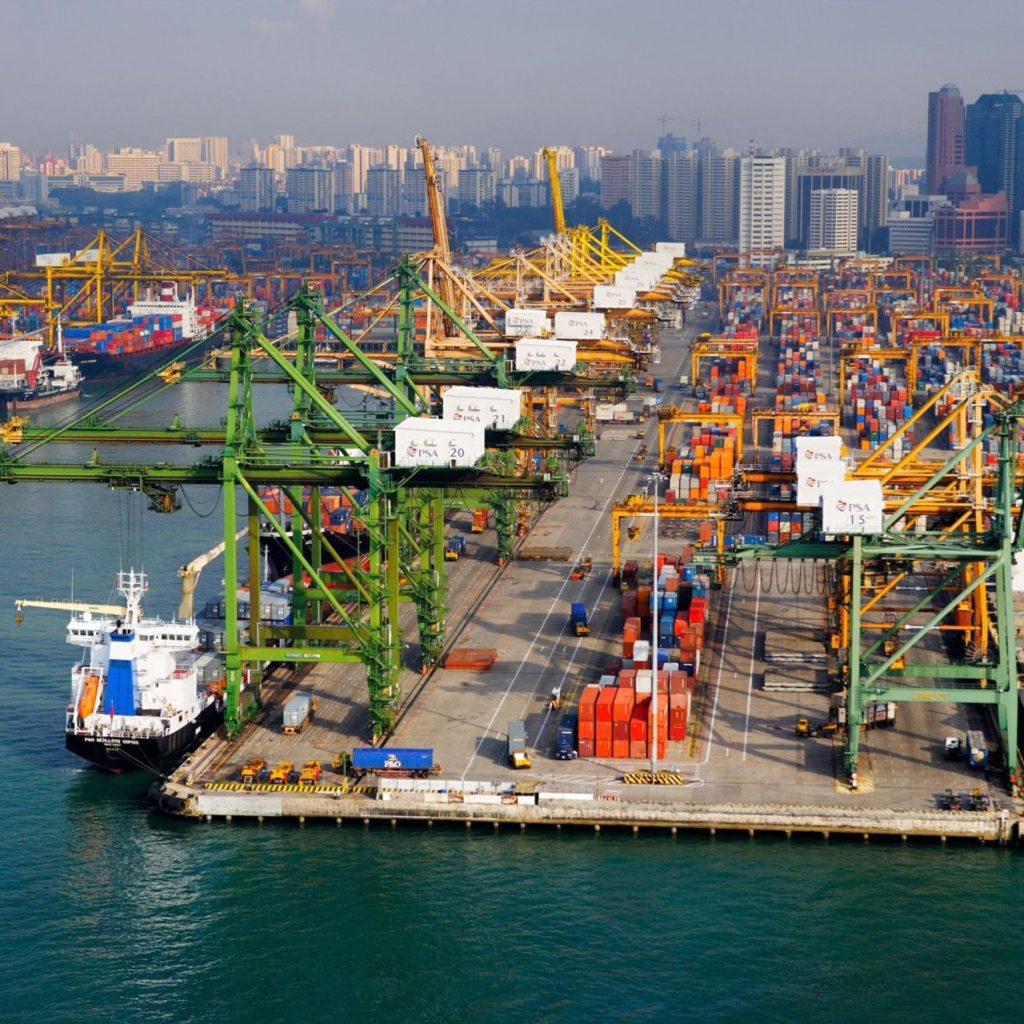
Singapore operates as the world’s leading transshipment megahub and a vital commercial gateway for Southeast Asia. Positioned along the critical Strait of Malacca, the Port of Singapore connects Asian suppliers with global shipping lanes.
Meanwhile, Cat Lai Terminal in Ho Chi Minh City serves as Vietnam’s largest and most active container gateway. It handles the vast majority of import-export container traffic across the Southern Key Economic Zone.
Managing your sea freight from Singapore to Cat Lai with a dedicated logistics partner ensures rapid vessel connections and transparent operational control. Furthermore, frequent daily feeder loops ensure that your cargo reaches assembly lines in Southern Vietnam without costly port dwell delays.
1. Strategic Role of the Singapore – Cat Lai Shipping Lane
The maritime corridor linking Singapore and Ho Chi Minh City forms an indispensable commercial bridge:
-
Global Transshipment Nexus: Cargo originating from Europe, the Americas, the Middle East, and South Asia routinely transships at Singapore before feeding into Vietnam.
-
High-Tech Sourcing & Regional Distribution: Singapore hosts regional distribution centers (RDCs) for multinational electronics, pharmaceutical, and precision engineering firms.
-
Direct Gateway to Southern Industrial Hubs: Cat Lai Port directly feeds manufacturing facilities across Ho Chi Minh City, Binh Duong, Dong Nai, and Long An.
Consequently, maintaining an efficient ocean connection across this short-sea route safeguards your lean inventory strategies and prevents assembly line downtime.
2. Sailing Schedules and Transit Times
Because Singapore and Ho Chi Minh City sit in close geographic proximity, sailing schedules are exceptionally fast and frequent:
-
Port of Loading (POL): Port of Singapore, covering terminals operated by PSA Singapore (Tanjong Pagar, Keppel, Brani, Pasir Panjang, and Tuas Port).
-
Port of Discharge (POD): Cat Lai Terminal (Ho Chi Minh City).
-
Port-to-Port Ocean Transit: 2 to 4 days via direct feeder and liner services.
-
Total Door-to-Door Delivery: Typically 4 to 6 business days, including Singapore warehouse collection, export filing, ocean transit, and factory drayage in Southern Vietnam.
-
Sailing Frequency: Daily departures, with 10 to 14 scheduled feeder vessels connecting the two ports every week (operated by carriers like ONE, CNC, Samudera, SITC, Evergreen, and Maersk).
3. Comprehensive Shipping Modes: FCL vs. LCL

We offer versatile container transport options structured around your specific volume and commodity requirements:
Full Container Load (FCL)
FCL is the premier choice for volume shipments requiring exclusive container security:
-
20ft General Purpose (20’GP): Ideal for heavy, compact commodities like industrial lubricants, metal raw materials, chemical drums, and polymer resins.
-
40ft Standard & High Cube (40’GP / 40’HQ): Optimal for high-volume, lighter products including consumer electronics, retail merchandise, machinery spare parts, and packaging goods.
-
Refrigerated Containers (Reefers): Maintain precision temperature parameters for temperature-sensitive pharmaceuticals, laboratory reagents, and perishable foodstuffs.
FCL shipping minimizes cargo re-handling because workers seal the container at the Singapore loading facility and open it only at your factory platform.
Less Than Container Load (LCL) Consolidation
LCL consolidation suits smaller commercial shipments measuring from 1 to 15 cubic meters (CBM):
-
Shippers deliver loose cartons or pallets to our designated Container Freight Station (CFS) inside the Singapore port logistics zone.
-
Our operations team consolidates diverse consignments into scheduled weekly shared containers.
-
You pay strictly for the actual cubic volume (CBM) or gross weight (MT) your freight occupies.
Thus, LCL shipping enables trading enterprises to import regular, small-batch consignments without paying for unused container space.
4. Key Commodities Imported from Singapore
This short-sea maritime lane handles diverse manufacturing inputs, consumer goods, and transshipment cargo:
-
Electronics & High-Tech Components: Integrated circuits (ICs), microchips, semiconductor manufacturing consumables, printed circuit boards (PCBs), and precision testing equipment.
-
Petrochemicals & Specialty Lubricants: Base oils, fuel additives, chemical solvents, specialty catalysts, and plastic polymers.
-
Industrial Machinery & Spare Parts: Hydraulic pumps, automated valves, automation sensors, replacement filters, and industrial tooling.
-
Pharmaceuticals & Healthcare Supplies: Medical devices, surgical instruments, active pharmaceutical ingredients, and diagnostic test kits.
-
Consumer Packaged Goods & Retail Stock: Packaged foods, cosmetics, nutritional supplements, and branded consumer retail items.
5. Customs Clearance and Preferential Tariffs (Form D)
Importing cargo from Singapore into Vietnam allows companies to leverage regional trade agreements and minimize landed costs:
Preferential Tariff Reductions (Form D)
Under the ASEAN Trade in Goods Agreement (ATIGA), qualifying goods manufactured in ASEAN nations enter Vietnam at 0% preferential import duty.
Importers must obtain an official Certificate of Origin Form D (or an authorized electronic e-Form D transmitted via the ASEAN Single Window).
Furthermore, if goods originate outside ASEAN and merely transship through Singapore, importers must obtain a Certificate of Non-Manipulation (CNM) from Singapore Customs to preserve preferential tariffs from the original manufacturing country.
Essential Import Documentation Checklist
To guarantee rapid customs clearance upon arrival at Cat Lai Port, compile the following papers:
-
Commercial Invoice & Packing List: Detailing accurate 8-digit HS codes, commercial values, net/gross weights, and unit quantities.
-
Ocean Bill of Lading (B/L): Issued as a Seaway Bill or Surrendered B/L to avoid document courier delays on this short transit route.
-
Certificate of Origin (Form D / CNM): Duly validated and electronically verifiable on the trade portal.
-
Specialized Inspection Registration (If Applicable): Required for food safety checks, medical device registrations, or quality compliance certificates under Vietnamese ministerial regulations.
6. End-to-End Operational Workflow
Our operations team manages every shipment across five seamless milestones:
Step 1: Booking Confirmation & Equipment Release
Submit your cargo dimensions and cargo readiness dates to receive an all-inclusive freight quotation. Next, our Singapore partners position clean container equipment at the supplier’s warehouse or regional distribution center.
Step 2: Warehouse Stuffing & Port Gating
The supplier packs the container and completes drayage to the designated PSA Singapore terminal. The hauler gates the sealed container into the yard before the vessel CY closing deadline.
Step 3: Singapore Export Customs Clearance
Our local brokers submit export declarations via TradeNet, Singapore’s electronic trade declaration system. Once customs clears the permit, terminal cranes load the container onto the scheduled feeder vessel.
Step 4: Short-Sea Ocean Voyage
The vessel departs Singapore and sails northeast across the South China Sea directly to the Cai Mep – Thi Vai river passage. Advanced tracking platforms provide real-time updates throughout the 2-to-4-day voyage.
Step 5: Cat Lai Discharge & Inland Factory Delivery
Upon arrival at Cat Lai Port, our field runners process customs declarations via the VNACCS system. Then, our container chassis fleet collects the container and delivers it directly to your factory dock in Binh Duong, Dong Nai, or Ho Chi Minh City.
7. Practical Tips to Prevent Shipping Delays
Shippers can optimize their supply chain performance by implementing four proven logistics recommendations:
First, always request a Seaway Bill or Surrendered B/L (Express Release). Because the voyage takes only 2 to 4 days, physical paper bills of lading sent via courier will arrive after the ship docks, creating avoidable port storage fees.
Second, verify the Certificate of Origin type early. Ensure that goods made in Singapore carry an electronic Form D, while third-country transit cargo holds a valid Certificate of Non-Manipulation.
Third, pack palletized cartons securely using heavy stretch wrap, edge protectors, and strapping bands. Stable packing prevents cargo shifting during fast marine feeder transits.
Finally, resolve customs declarations prior to vessel docking. Pre-clearing customs on the VNACCS system allows our dispatchers to schedule trucks the moment terminal gantry cranes discharge your box.
Frequently Asked Questions (FAQ)
What is the average ocean transit time from Singapore to Cat Lai Port?
Direct ocean transit takes between 2 and 4 days depending on the specific feeder service and weather conditions along the maritime corridor.
Which terminal in Ho Chi Minh City receives vessels from Singapore?
Cat Lai Terminal is the primary discharge port for intra-Asia feeder vessels, although certain deep-sea transshipment services discharge at Cai Mep terminals.
What is a Certificate of Non-Manipulation (CNM), and when is it needed?
A CNM is issued by Singapore Customs for third-country cargo transshipping through Singapore. It proves that the cargo remained under customs supervision and underwent no processing, preserving the original preferential tariff status (such as Form E or Form EUR.1).
Our dedicated service for sea freight from Singapore to Cat Lai provides a fast, dependable link between Southeast Asia’s trade hub and Southern Vietnam’s manufacturing sector. Contact our logistics desk today to check upcoming sailing dates, verify Form D eligibility, and secure competitive ocean freight rates for your cargo!
Read more:
Reliable Sea Freight Shipping from Nhava Sheva to Haiphong Port
Dịch vụ mua hàng hộ từ Nhật Bản về Việt Nam giá rẻ, uy tín
