Table of Contents
What Is Lift-On/Lift-Off (LoLo) Fee in Container Shipping? Definitions, Rates, and Best Practices
Managing containerized shipping involves navigating various local charges, port surcharges, and terminal invoices. Among these standard terminal line items, the Lift-On/Lift-Off fee—commonly abbreviated as LoLo—appears on almost every inland drayage invoice.
However, many first-time cargo owners confuse this charge with ocean carrier surcharges like Terminal Handling Charges (THC). Consequently, disputes over payment obligations and logistics budgeting frequently arise.
Understanding the Lift-On/Lift-Off fee in container shipping helps importers and exporters calculate true landside transportation costs. Furthermore, mastering digital port payment systems streamlines gate operations and eliminates unnecessary terminal waiting times.
1. What Is the Lift-On/Lift-Off (LoLo) Fee?
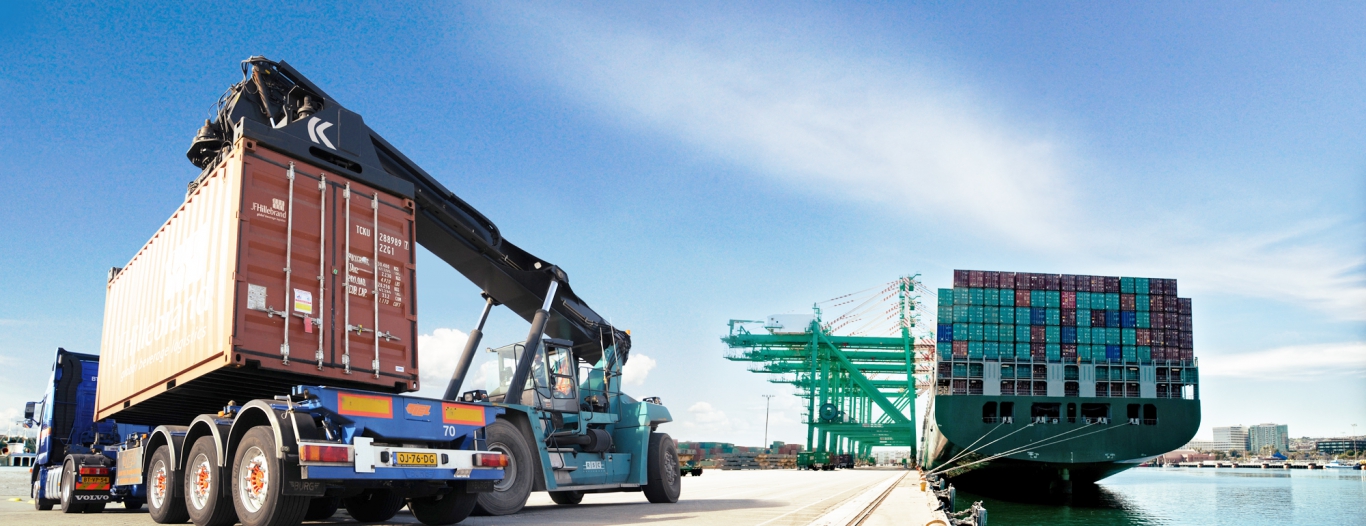
The Lift-On/Lift-Off (LoLo) fee is a terminal service charge billed directly by seaports, inland container depots (ICDs), or container yards. It covers the mechanical operation of lifting a shipping container onto or off a transport vehicle chassis.
Whenever an inland container tractor arrives at a terminal, heavy equipment must transfer the container. Rubber-tyred gantry cranes (RTGs), rail-mounted gantries (RMGs), or reach stackers execute this physical maneuver.
Therefore, the terminal assesses a LoLo fee to offset the capital depreciation, fuel consumption, and labor required to operate these heavy lifting machines.
2. When Does the LoLo Fee Occur?
A container incurs lifting operations at multiple milestones throughout its transport lifecycle. Depending on the direction of trade, specific operational scenarios apply:
For Import Shipments (Hàng Nhập Khẩu)
-
Lift-Off at Terminal Yard: After gantry cranes discharge the import container from the vessel, yard cranes place it onto the yard stack.
-
Lift-On onto Truck Chassis: When your drayage truck arrives to collect the container, an RTG crane lifts the loaded box from the stack and places it onto the trailer chassis.
-
Lift-Off at Empty Depot: Once your factory unloads the goods, your truck returns the empty container to a designated shipping line depot. A reach stacker lifts the empty box off your trailer and stacks it in the depot yard.
For Export Shipments (Hàng Xuất Khẩu)
-
Lift-On at Empty Depot: Your trucking hauler dispatches an empty chassis to collect an empty equipment unit from the carrier’s depot. The depot crane lifts the empty box onto the chassis.
-
Lift-Off at Port Yard: After stuffing cargo at your manufacturing plant, the tractor gates into the seaport. A yard crane lifts the loaded container off the chassis and positions it in the terminal yard to await vessel loading.
3. LoLo vs. THC: Understanding the Key Differences
Shippers often mistake the LoLo fee for the Terminal Handling Charge (THC). While both fees relate to port terminal operations, their operational scope, billing entity, and legal nature differ significantly:
| Feature | Lift-On/Lift-Off (LoLo) Fee | Terminal Handling Charge (THC) |
| Billing Entity | Seaport terminal, ICD, or inland depot operator | Ocean carrier (Shipping Line) |
| Payment Channel | Paid directly by the trucker or cargo owner via e-Port | Invoiced to the shipper or consignee on the freight bill |
| Physical Scope | Vertical lift between the truck chassis and the yard stack | Stevedoring between the vessel hold and the terminal wharf |
| Equipment Used | Yard RTG cranes, RMG cranes, and reach stackers | Ship-to-Shore (STS) quayside gantry cranes |
| Cost Range | Relatively low local rate per lift operation | Higher regional ocean surcharge per container |
Simply put: THC covers moving the container between the vessel and the dockside. In contrast, LoLo covers transferring the container between the dockside stack and the inland highway truck.
4. Average LoLo Rate Benchmarks in Vietnam
Terminal operators establish standardized tariff schedules based on container dimensions, cargo condition, and weight classification.
Below are typical industry benchmarks observed across major maritime gateways like Cat Lai Port and Haiphong Port:
-
20ft Dry Container (Loaded / Hạ bãi hoặc Nâng bãi): Approximately 350,000 VND to 450,000 VND per move (excluding VAT).
-
40ft / 40ft HQ Dry Container (Loaded): Approximately 500,000 VND to 700,000 VND per move.
-
Empty Container Lifting (Nâng/Hạ rỗng): Typically 150,000 VND to 250,000 VND for a 20ft unit, and 250,000 VND to 380,000 VND for a 40ft unit.
-
Refrigerated & Overweight Units: Attract additional surcharges due to power plug connections, PTI monitoring, or specialized lifting spreader adjustments.
5. How to Pay LoLo Fees via Digital Port Portals (e-Port)
Modern Vietnamese marine terminals have transitioned entirely to automated, paperless port clearance systems:
Step 1: Log In to the Terminal e-Port System
Access the official port digital portal, such as Saigon New Port e-Port (for Cat Lai) or Haiphong Port e-Port. Enter your registered corporate credentials to initiate the service order.
Step 2: Create a Service Order and Enter Details
Select the appropriate service category (e.g., Gate-in Full Container for export or Gate-out Full Container for import). Next, input the container identification number, booking reference, or electronic Delivery Order (e-DO) code.
Step 3: Complete Electronic Payment
Review the calculated LoLo tariff breakdown and proceed to payment. Settle the invoice instantly using corporate internet banking, linked digital wallets, or international payment cards.
Step 4: Issue the Digital Equipment Interchange Receipt (e-EIR)
Once payment clears, the e-Port system generates a digital Equipment Interchange Receipt (e-EIR) containing a unique QR barcode. The system transmits this QR code directly to the assigned truck driver’s smartphone.
Step 5: Fast Terminal Gate Entry
The driver scans the digital QR code at automated terminal entry gates. The terminal operating system (TOS) assigns an exact yard coordinate, and RTG cranes execute the lift smoothly without manual paperwork checks.
6. Practical Tips to Avoid Unexpected LoLo Penalties
Shippers and dispatchers can minimize unexpected expenses by following four practical logistics guidelines:
First, settle LoLo invoices well before the tractor arrives at terminal gates. Resolving payments early eliminates vehicle idling queues at harbor entry lanes.
Second, verify empty return depot locations carefully. Returning empty equipment to an incorrect depot triggers double-lifting penalties, storage surcharges, and additional drayage runs.
Third, maintain electronic invoices and payment receipts systematically. Clear digital accounting prevents disputes when reconciling inland haulage advances with forwarding agents.
Finally, check container tare and cargo weight data during e-Port order creation. Entering incorrect container weights results in system rejection at terminal gate-in scales.
Frequently Asked Questions (FAQ)
Who is legally responsible for paying the LoLo fee?
The cargo owner (importer or exporter) ultimately bears this cost. However, trucking companies or freight forwarders typically advance the fee on e-Port and bill it back on their inland transport invoice.
Is the LoLo fee subject to Value-Added Tax (VAT)?
Yes. Seaports and depot operators apply standard commercial VAT (typically 8% to 10%) on all terminal lifting service invoices.
Do I pay a LoLo fee for LCL shipments?
No, individual LCL cargo owners do not pay port LoLo fees directly. Instead, the freight consolidator absorbs container lifting costs and recovers them via Container Freight Station (CFS) handling tariffs.
Mastering the Lift-On/Lift-Off fee in container shipping prevents billing surprises and ensures prompt gate-in and gate-out execution. Contact our logistics operations team today for dependable inland drayage, transparent port billing, and streamlined customs clearance across Vietnam!
Read more:
Reliable Sea Freight Shipping from Singapore to Cat Lai Port
Dịch vụ chuyển phát nhanh chứng từ, bưu phẩm từ Hà Nội đi Bulgari
