Table of Contents
When Do Customs Authorities Request Container Inspection?
Customs requesting a container inspection (Red Channel or suspicious scan results) is a standard risk management procedure to prevent commercial fraud. Understanding the reasons for inspection helps businesses proactively prevent delays and keep clearance on track.
Proactive compliance safeguards sản phẩm (product) quality, reduces port demurrage impacting giá cả (pricing), maintains seamless kênh phân phối (distribution channels), and boosts global xúc tiến thương mại (trade promotion) activities.
1.1. Core Reasons Containers Get Assigned to Red Channel Inspection
Customs risk management systems analyze data automatically and flag containers based on specific risk indicators.
1.1.1. Automated System Risk Assessment Criteria
-
Trader Compliance History: Newly established firms or businesses with prior customs infractions.
-
High-Tariff Commodities: Sensitive cargo categories, high-duty items, or goods under strict specialized controls.
-
High-Risk Origin: Shipments originating from countries or territories flagged for origin fraud alerts.
1.1.2. Anomaly Detection via Container Scanners or Intelligence
-
Scanner Image Discrepancies: Uncovering density, volume, or visual mismatches compared against declarations.
-
Investigative Agency Alerts: Customs receiving official intelligence or smuggling tip-offs regarding specific shipments.
1.2. 5-Step Process Customs Follows for Physical Container Inspections
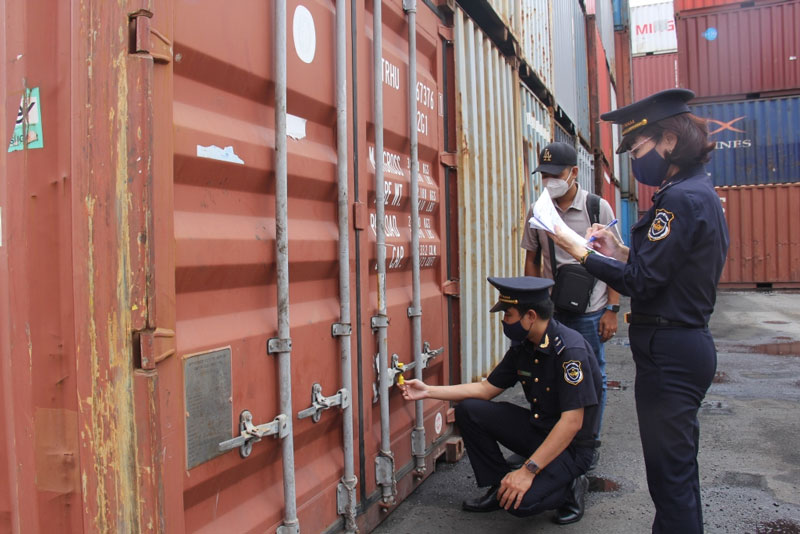
Physical container inspections at port yards adhere to a standardized statutory sequence:
Enterprises submit documentation and schedule inspection times with customs officers and port operators.
Port workers cut customs/carrier seals in the presence of customs officials and cargo owners.
Customs officers verify cargo names, quantities, item types, labels, specifications, and origins.
Customs officials record findings on Official Inspection Result Forms; both parties sign for verification.
Re-sealing containers for release if compliant, or transferring files for penalty processing upon mismatch.

1.3. Preventative Steps to Reduce Container Inspection Risks
Businesses can maintain a high Green Channel ratio by implementing compliance enhancement solutions:
1.3.1. Optimizing Customs Declarations
-
Accurate & Honest Declarations: Ensure cargo descriptions, HS codes, quantities, and values match original documents.
-
Attaining AEO Status: Maintain a solid legal compliance record to enjoy physical inspection exemption privileges.
-
Proper Stowing Plans: Affix clear labels and stow cargo neatly to facilitate smooth X-ray scanning.
1.4. Benefits of Proper Preparation for Customs Inspections
Streamlining physical inspections minimizes losses across the entire supply chain:
1.4.1. Protecting Supply Chain Value
-
Preserving Product Integrity: Careful cargo handling retains original sản phẩm (product) quality.
-
Controlling Costs & Prices: Fast inspection times avoid extra demurrage fees that raise giá cả (pricing).
-
Distribution Channel Reliability: On-time cargo release preserves consistency for all kênh phân phối (distribution channels).
-
Boosting Trade Promotion Prestige: Transparent filings build credibility, enhancing xúc tiến thương mại (trade promotion).
1.5. Conclusion
Customs container inspections aim to ensure trade security and compliance. Maintaining strong compliance protects sản phẩm (products), stabilizes giá cả (pricing), secures kênh phân phối (distribution channels), and drives xúc tiến thương mại (trade promotion) sustainably.
1.6. Related Resources
Separate Section: Frequently Asked Questions (Q&A)
Q1. Who pays the container handling and seal-cutting fees for customs inspections?
The cargo owner (importer/exporter) bears all lifting, handling, and yard inspection service fees.
Q2. How long does a physical customs container inspection take?
Physical inspections typically take 2 to 8 working hours depending on the required ratio (5%, 10%, or 100%).
Q3. What happens if goods suffer damage during a customs container inspection?
If damage results from stevedore handling, port operators bear compensation responsibility per official logs.
Q4. Can an enterprise request an inspection in the absence of the cargo owner?
In high-risk cases or suspected violations, Customs retains statutory authority to conduct inspections unrepresented.
Q5. Does Vietship offer owner representation services during customs inspections?
Yes. We represent cargo owners, supervise yard labor, and expedite customs clearance procedures.
