Table of Contents
Vietnam’s Strategic Shift: Moving from Service Delivery to Building National Logistics Capacity
Vietnam occupies a pivotal geographic position along major international sea routes in the Asia-Pacific region. Over the past decade, foreign direct investment and booming industrial trade have driven rapid logistics expansion nationwide.
However, logistics operations have long been viewed merely as a commercial support service. This narrow perspective has led to fragmented local planning, elevated transport expenditures, and modal imbalances across regions.
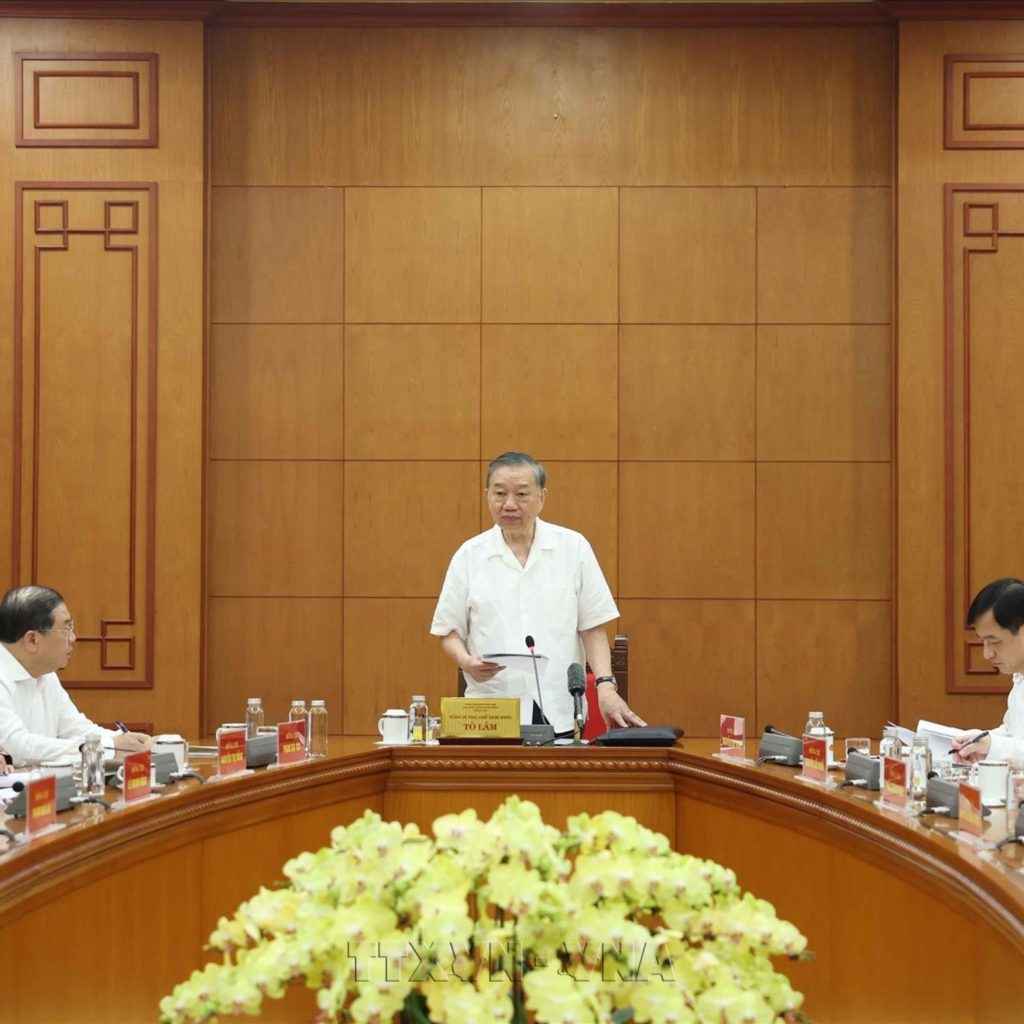
During a high-level working session with the Government Party Committee, Party General Secretary and State President To Lam announced a fundamental strategic shift. Vietnam must decisively transition from simply developing logistics services to building national logistics capacity. This strategic evolution positions the sector as a central pillar of national economic sovereignty, efficiency, and international competitiveness.
1. Redefining Logistics: A Foundation for Double-Digit Growth
Logistics is no longer treated as an isolated sub-sector of the economy:
First, logistics reflects the operational, organizational, and connectivity capacity of the entire economy. It directly impacts national competitiveness, supply chain resilience, and defense-security readiness.
Second, logistics must serve as an active growth engine to support Vietnam’s ambitious double-digit economic growth targets. Modern supply networks unlock new economic spaces, enhance labor productivity, and lower domestic production costs.
Furthermore, national logistics planning requires unified, centralized governance at the Prime Ministerial level. Government agencies must eliminate fragmented local projects developed solely within provincial administrative boundaries.
2. Positioning Vietnam as a Global and Regional Transshipment Hub
Vietnam aims to transform its natural coastal geography into a lasting competitive advantage:
The national vision focuses on establishing Vietnam as a premier transshipment, warehousing, and cargo distribution gateway for Southeast Asia and global trade lanes.
Consequently, domestic supply chains must actively attract and process international cargo flows. Rather than servicing domestic import-export flows alone, Vietnam will actively capture foreign transit volumes.
Cargo from regional trading partners will move through Vietnamese maritime gateways for bonded storage, international sorting, and value-added processing. Step by step, domestic hubs will integrate directly into the management of global supply chain networks.
3. Developing a Multi-Centric, Multimodal Logistics Network
Executing this national logistics vision requires restructuring physical trade corridors:
-
Corridor-Based Infrastructure: Prioritize high-capacity logistics development along primary economic corridors. These corridors link deep-water seaports, international airports, railway freight yards, and border crossings directly to manufacturing hubs.
-
Multi-Centric Hierarchy: Formulate master plans categorizing logistics centers into national megahubs, regional distribution nodes, and specialized commodity terminals.
-
Evidence-Based Planning: Approve logistics facilities strictly based on verified freight volumes, multimodal access, land availability, and operational return on investment. The government strictly prohibits speculative local projects lacking clear cargo sources.
-
Overcoming Road Over-Reliance: Shift long-haul container movements toward cost-effective coastal shipping, inland waterways, and modernized rail systems.
4. Digital Transformation, Green Logistics, and Shared Data
Technology and sustainable practices form the primary catalysts for modernizing Vietnam’s supply networks:
Unified Logistics Data Ecosystem
The government is accelerating the establishment of a standardized, shared logistics data architecture. This digital infrastructure unifies electronic customs declarations, terminal operating systems (TOS), warehouse management portals, and carrier tracking manifests.
Standardized electronic documentation enables real-time cargo visibility across borders. In addition, digital route optimization platforms eliminate empty truck runs and reduce port gate-in queues.
Advancing the Green Logistics Transition
Developing environmentally sustainable supply chains protects national export markets against tightening carbon border taxes (such as CBAM).
The state actively encourages investment in energy-efficient automated warehouses, rooftop solar storage facilities, and low-emission commercial vehicle fleets.
5. Cultivating Large-Scale Domestic Logistics Enterprises

Strengthening national economic sovereignty requires building resilient domestic enterprises capable of orchestrating end-to-end supply chains:
Currently, domestic forwarders remain concentrated in fragmented, low-margin forwarding and trucking segments. The national strategy introduces targeted financial, tax, and land incentives to nurture large-scale domestic logistics conglomerates.
These homegrown enterprises will deliver comprehensive 4PL and 5PL integrated logistics solutions. Concurrently, public policies foster strategic partnerships between domestic logistics operators, industrial manufacturers, agricultural exporters, and global ocean shipping alliances.
6. Immediate Action Items and Strategic Bottlenecks to Clear
To establish momentum, the government has directed ministries and local authorities to address critical operational bottlenecks:
First, authorities are comprehensively upgrading the National Logistics Master Plan to reflect new double-digit national growth targets.
Second, a centralized National Logistics Steering Committee will oversee execution across ministries to enforce institutional accountability.
Third, regulatory agencies must eliminate major operational bottlenecks. Priorities include reforming specialized customs inspections (KTCN), upgrading intermodal road-port links, and accelerating port-rail connectivity.
Finally, ministries are rolling out a standardized National Logistics Performance Index (LPI). This metric framework monitors logistics cost reductions, ensuring operational expenditures decline toward regional benchmarks.
Frequently Asked Questions (FAQ)
What does “building national logistics capacity” mean for Vietnam?
It means transforming logistics from an isolated transport service into an integrated national infrastructure system. This system strengthens economic connectivity, lowers business costs, enhances supply chain resilience, and drives national growth.
How does this strategic policy impact foreign logistics investors?
Foreign investors gain clearer legal frameworks, access to standardized multimodal corridors, and transparent incentives for large-scale investments in green warehousing, deep-sea ports, and digital infrastructure.
What are the immediate priorities for Vietnam logistics leading into 2027?
Immediate priorities focus on resolving specialized inspection bottlenecks, removing port access congestion, establishing a national logistics steering committee, and deploying shared electronic data networks.
The directive to accelerate building national logistics capacity marks a transformative turning point for Vietnam’s trade infrastructure. Contact our multimodal logistics desk today to align your regional routing, leverage modern port gateways, and optimize your supply chain operations across Vietnam!
Read more:
Can You Cancel a Customs Declaration After Registration in Vietnam? Regulations & Procedures
Dịch vụ chuyển phát nhanh hàng hóa Hà Nội đi Espoo
