Table of Contents
Vietnam Logistics Moves Toward Better Connectivity
Vietnam’s logistics industry is entering a new stage of development. As manufacturing, exports and international trade continue to grow, businesses need logistics networks that can move goods faster, more efficiently and with greater visibility.
One of the most important trends in 2026 is the stronger focus on connectivity between different transportation modes.
Recent discussions in Vietnam have highlighted the need to improve links between road, rail, inland waterways, maritime transport and air freight. The objective is to make better use of existing infrastructure, reduce pressure on road transportation and improve overall logistics efficiency.
This development reflects a simple reality: modern supply chains do not depend on one transportation method. They depend on how well different logistics services work together.

Why Multimodal Transportation Matters
A typical international shipment can pass through many stages before reaching the final customer:
Factory → Warehouse → Truck → Logistics Center → Seaport → Container Ship → Destination Port → Final Customer
Each stage can affect the total delivery time and cost.
For example, road transportation is flexible and useful for short distances, while sea freight is more suitable for large international shipments. Rail can support long-distance cargo, while inland waterways can provide an economical option for high-volume goods.
By combining different modes, businesses can select the most appropriate transportation solution for each stage of the journey.
This is the core idea behind multimodal logistics.
Vietnam’s Logistics Infrastructure Needs Stronger Connections
Infrastructure is one of the foundations of an efficient logistics system. However, having roads, warehouses, ports and logistics centers is not enough.
These facilities need to be connected according to actual cargo flows.
Recent industry discussions have emphasized that logistics infrastructure should be planned around economic regions and supply chains, rather than being considered only within administrative boundaries.
For example, an industrial area may have strong production capacity, but its logistics performance can still be limited if the connection to a seaport or major logistics hub is inefficient.
Better regional connectivity can help businesses reduce unnecessary transportation legs, shorten cargo handling time and improve supply chain reliability.
Sea Freight Remains a Key Part of International Logistics
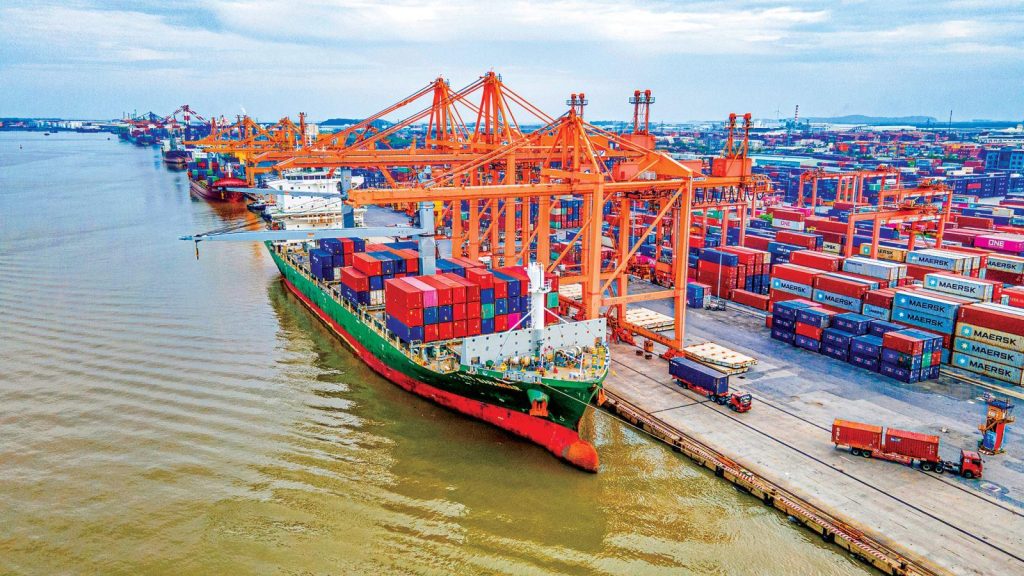
Vietnam’s seaport system continues to play an important role in international trade.
For exporters and importers, container shipping provides access to major markets across Asia, Europe, North America and other regions.
A sea freight shipment usually involves several stages, including:
- Cargo preparation
- Inland transportation
- Container stuffing
- Customs clearance
- Port handling
- Vessel loading
- Ocean transportation
- Destination port handling
- Final delivery
Understanding these stages helps businesses plan shipments more effectively.
For example, Vinalines’ article “Shipping from Nha Trang Port to Brunsbuttel Port by Sea” provides another example of an international sea freight route and demonstrates how cargo can be connected from a Vietnamese port to an overseas destination. Read the related Vinalines article.
Digital Transformation Is Changing Logistics Operations
Technology is becoming increasingly important in modern logistics.
Companies are using digital platforms to track shipments, manage inventory, optimize transportation routes and improve communication between different supply chain partners.
Common logistics technologies include:
Transportation Management Systems (TMS) help businesses plan and monitor transportation.
Warehouse Management Systems (WMS) support inventory control, warehouse operations and order processing.
GPS and real-time tracking allow businesses to monitor vehicles and shipment movements.
Data analytics can help identify delays, inefficient routes and potential cost-saving opportunities.
Digitalization can also improve customer experience because customers can receive more accurate information about the location and status of their shipments.

Green Logistics Is Becoming More Important
Another major trend in Vietnam logistics is the move toward greener transportation and supply chain operations.
Businesses are increasingly looking at ways to reduce fuel consumption, emissions and unnecessary transportation.
Green logistics can involve:
- Optimizing delivery routes
- Reducing empty truck trips
- Improving vehicle utilization
- Using energy-efficient warehouse equipment
- Increasing the use of rail and inland waterways
- Improving container utilization
- Reducing unnecessary packaging
The development of multimodal transportation can also contribute to more sustainable logistics when businesses select the appropriate transport mode for each cargo flow.
Vietnam’s transportation development strategy is increasingly emphasizing both connectivity and green transformation, with greater attention to multimodal transport.
Logistics Costs: More Than Just Freight Rates
When businesses calculate logistics costs, transportation charges are only one part of the equation.
Other costs may include:
- Warehousing
- Inventory
- Cargo handling
- Customs procedures
- Container storage
- Demurrage and detention
- Waiting time
- Additional transportation
- Empty container movements
This means that the cheapest freight rate does not always represent the lowest total logistics cost.
A shipment with a lower ocean freight rate could become more expensive if it requires additional storage, longer inland transportation or extended waiting time.
Therefore, businesses should evaluate logistics based on the total cost from origin to final destination.
Logistics Hubs Can Improve Supply Chain Efficiency
Logistics centers and inland logistics hubs can play an important role in connecting production areas with seaports and international markets.
They can support activities such as:
- Cargo consolidation
- Warehousing
- Container handling
- Customs procedures
- Distribution
- Inland transportation
By moving some logistics activities closer to production areas, businesses can reduce unnecessary trips to ports and improve cargo organization.
This approach is particularly useful for manufacturing and export clusters that handle large and regular cargo volumes.
What Will Define Vietnam Logistics in 2026?
Several factors are likely to remain important for logistics businesses throughout 2026.
1. Multimodal connectivity
Connecting road, rail, inland waterway, sea and air transportation can create more flexible logistics solutions.
2. Digital logistics
Shipment tracking, data management and digital documentation can improve visibility and operational efficiency.
3. Green transportation
Businesses are increasingly looking for ways to reduce emissions and improve resource efficiency.
4. Better logistics infrastructure
Ports, warehouses, logistics centers and transportation corridors need to work together rather than operate as separate systems.
5. Total supply chain optimization
Companies should focus on the complete logistics journey instead of optimizing only one individual transportation stage.

Conclusion
Vietnam logistics in 2026 is moving toward a more connected, multimodal, digital and sustainable model.
The development of logistics infrastructure will remain important, but infrastructure alone cannot solve every supply chain challenge. The real opportunity lies in connecting different transportation modes, logistics facilities, technology systems and business partners into one efficient network.
For importers, exporters and manufacturers, this means logistics planning should look beyond individual freight rates or transportation routes.
A successful logistics strategy should consider the entire journey of goods — from the factory and warehouse to the port, across the ocean and finally to the customer.
As Vietnam strengthens its role in global supply chains, better connectivity will become an increasingly important factor in improving delivery performance, controlling logistics costs and enhancing international competitiveness.
Related reading: Where Does a Container Go After Leaving the Port? – Vietship
