Table of Contents
Vietnam Logistics Enters a New Stage of Development
Vietnam’s logistics industry is becoming increasingly important as manufacturing, international trade and supply chains continue to expand. In 2026, one of the key topics attracting attention is how to improve connectivity between different transportation modes and logistics infrastructure.
Recent discussions on Vietnam’s transportation service development have emphasized the need to strengthen connections between road, rail, maritime, inland waterway and air transport. The goal is to make better use of existing infrastructure while reducing transportation pressure and improving logistics efficiency.

Logistics Is More Than Transportation
Many people think of logistics simply as moving goods from one location to another. However, modern logistics involves a much broader system.
A shipment can move through several stages:
Factory → Warehouse → Truck → Logistics Center → Port → Container Vessel → Destination Port → Final Customer
Each stage can influence the final cost and delivery time.
For example, a company may have an efficient sea freight service, but if cargo spends too much time waiting for a truck, warehouse or terminal operation, the overall supply chain can still become inefficient.
This is why connectivity has become one of the most important topics in Vietnam logistics.
Multimodal Transport Is Becoming More Important
Multimodal transportation means combining different transportation methods within the same supply chain.
Each mode has its own advantages:
Road transport: Flexible and suitable for first-mile and last-mile delivery.
Rail transport: Suitable for large volumes and long-distance transportation.
Sea freight: Efficient for international import and export cargo.
Inland waterway: Suitable for large-volume cargo with competitive transportation costs.
Air freight: Suitable for urgent and high-value shipments.
Instead of depending heavily on road transportation, businesses can combine several modes based on cargo characteristics, delivery requirements and destination.
Recent discussions about Vietnam’s logistics infrastructure have also highlighted the need to strengthen connections between production areas, logistics facilities and seaports while developing multimodal transportation.
Why Supply Chain Connectivity Matters
A strong logistics network should connect production areas, warehouses, logistics centers, ports, airports and markets.
This approach allows businesses to select a transportation method based on actual cargo demand rather than relying on a single option.
For example, agricultural products can be transported by truck from a production area to a logistics center, transferred to an inland waterway vessel and then connected to a seaport for international shipping.
This can help reduce pressure on roads and create more transportation options.
The development of multimodal logistics is therefore not only about adding new infrastructure. It is also about making existing infrastructure work together more effectively.
Sea Freight Remains a Key Part of Vietnam’s Logistics Network
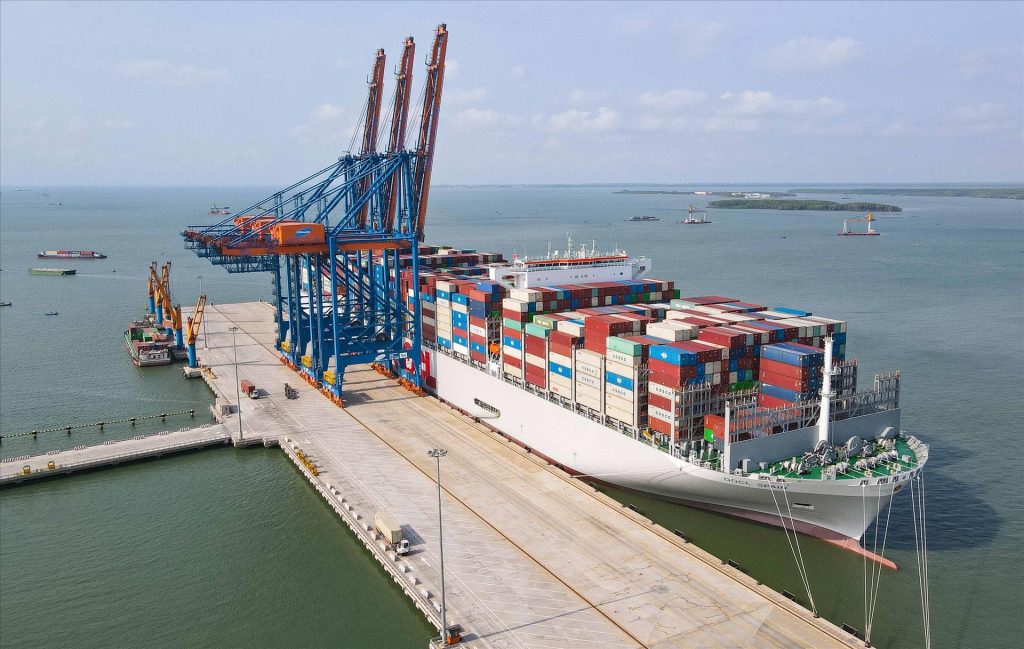
Sea freight continues to play a major role in Vietnam’s international supply chains.
Vietnam has a large network of seaports serving manufacturing, agriculture, consumer goods and other export industries. Container shipping connects Vietnamese businesses with major markets across Asia, Europe, North America and other regions.
For exporters, the sea freight process can involve several important steps, including cargo preparation, inland transportation, customs clearance, port handling, container loading, ocean transportation and final delivery.
Businesses can also learn more about international sea freight through https://vinalines.net/tro-ngai-thuong-gap-khi-xuat-khau-mot-lo-hang-lon/ which provides an example of international cargo transportation and related procedures.
Logistics Infrastructure Needs Better Regional Connections
One of the challenges facing Vietnam’s logistics sector is fragmented connectivity.
Different regions may have roads, warehouses, ports or industrial zones, but their effectiveness depends on how well these facilities are connected.
Recent industry discussions have called for logistics infrastructure to be developed around economic regions, supply chains and transportation corridors, rather than being viewed only within administrative boundaries.
This approach can help businesses identify more efficient cargo routes and improve connections between production centers and international gateways.
For example, a manufacturing area may benefit more from better connections to a nearby seaport or logistics center than simply adding another warehouse.
Digital Transformation Is Supporting Logistics Efficiency
Technology is another major factor shaping Vietnam logistics in 2026.
Logistics companies are increasingly using digital systems to monitor cargo, manage warehouses and improve transportation planning.
Common applications include:
- Real-time shipment tracking
- Warehouse Management Systems
- Transportation Management Systems
- GPS vehicle monitoring
- Digital documentation
- Data analysis
- Automated warehouse operations
Digitalization can improve shipment visibility and help businesses identify delays earlier.
For customers, better tracking also means greater transparency throughout the delivery process.

Reducing Logistics Costs Requires a Supply Chain Approach
Logistics costs do not only come from transportation.
Businesses may also face expenses related to:
- Warehousing
- Inventory
- Cargo handling
- Customs procedures
- Container storage
- Delivery delays
- Empty vehicle movements
- Additional transportation legs
Therefore, choosing the cheapest freight rate does not always mean choosing the cheapest logistics solution.
A more effective approach is to calculate the total logistics cost from origin to final destination.
This is particularly important for exporters that operate across multiple transportation modes and international markets.
Green Logistics Is Also Becoming a Priority
Sustainability is becoming another important direction for logistics development.
Green logistics focuses on reducing fuel consumption, emissions, unnecessary transportation and inefficient resource use.
Businesses can improve sustainability by:
- Optimizing transportation routes
- Increasing vehicle utilization
- Reducing empty trips
- Using energy-efficient equipment
- Expanding multimodal transportation
- Improving warehouse energy efficiency
Multimodal transportation can also contribute to greener logistics when businesses select the most efficient mode for each part of the journey.
What Should Logistics Businesses Focus on in 2026?
Vietnam’s logistics market is developing toward a more integrated model. Businesses should therefore consider several priorities.
1. Improve transportation connectivity
Connect roads, railways, inland waterways, airports and seaports more efficiently.
2. Develop multimodal solutions
Combine different transportation methods according to cargo volume, destination and delivery time.
3. Increase digital visibility
Use technology to track cargo and manage logistics operations more accurately.
4. Optimize total costs
Look beyond freight rates and consider warehousing, handling, inventory and waiting time.
5. Build sustainable logistics
Reduce fuel consumption, emissions and unnecessary transportation movements.
Conclusion
Vietnam logistics in 2026 is moving toward a more connected, multimodal and technology-driven supply chain.
The future of logistics will not depend only on building more roads, warehouses or ports. More importantly, these facilities need to be connected effectively so that goods can move smoothly from production areas to domestic and international markets.
For businesses, improving logistics performance means choosing the right combination of transportation modes, infrastructure, technology and logistics services.
As supply chains become more complex, stronger connectivity will help Vietnamese businesses improve delivery efficiency, control costs and compete more effectively in international markets.
Related Article
For a deeper look at the journey of a container after it leaves the port, read: https://vietship.net/en/reliable-sea-freight-for-plastic-products-from-ho-chi-minh-port-to-haiphong-port.html/
