Table of Contents
Vietnam Logistics Continues to Evolve
Vietnam’s logistics industry is entering a period of significant development as manufacturing, exports and international trade continue to expand. In 2026, logistics is increasingly viewed not simply as transportation, but as an integrated system connecting factories, warehouses, ports, airports, border gates and international markets.
Recent industry discussions have highlighted the importance of improving logistics connectivity and reducing unnecessary costs throughout the supply chain. The Vietnam Logistics Business Association has also emphasized the sector’s continued move toward global integration and stronger logistics capabilities.
For businesses, this means that choosing a suitable transport method is only one part of the logistics strategy. Companies also need to consider infrastructure, delivery time, inventory, technology, customs procedures and the connection between different transportation modes.

Why Connectivity Is Becoming More Important
A modern supply chain rarely depends on only one mode of transportation.
A typical shipment may follow a route such as:
Factory → Warehouse → Truck → Inland Logistics Hub → Seaport → Container Ship → Destination Port → Warehouse → Customer
Each stage has an impact on the final delivery time and logistics cost.
If a shipment spends too much time waiting at a warehouse, terminal or border gate, transportation efficiency can be reduced even when the actual distance is relatively short.
This is why logistics connectivity is becoming an important factor in improving supply chain performance.
Recent logistics discussions in Vietnam have focused on strengthening connections between production areas, seaports, border gates and international markets, particularly through multimodal transportation.
Multimodal Transport: A Key Logistics Trend
Multimodal transport combines different transportation methods within one supply chain.
Each mode has its own advantages:
- Road transport: Flexible and suitable for first-mile and last-mile delivery.
- Rail transport: Suitable for large-volume and long-distance cargo.
- Sea freight: Efficient for international import and export shipments.
- Inland waterway: Suitable for large volumes and cost-sensitive cargo.
- Air freight: Fast and suitable for urgent or high-value goods.
Instead of choosing one mode for the entire journey, businesses can combine several modes to achieve a better balance between cost, speed and reliability.
For example, a container may be transported by truck from a factory to a seaport, moved by vessel to an international destination and then delivered by truck or rail to the final warehouse.
This approach can help businesses improve transportation efficiency while making better use of existing infrastructure.
Logistics Costs Go Beyond Freight Rates
One common misconception is that logistics costs are simply transportation charges.
In reality, logistics costs can also include warehousing, inventory, waiting time, customs procedures, container storage and operational disruptions. Recent industry analysis has highlighted the importance of measuring these costs across the entire supply chain rather than focusing only on freight rates.
For example, a lower freight rate may not necessarily mean a lower total logistics cost if the shipment requires longer transit time, additional storage or more handling.
Therefore, businesses should evaluate logistics based on the total cost of moving goods from origin to destination.

Sea Freight Remains Important for International Trade
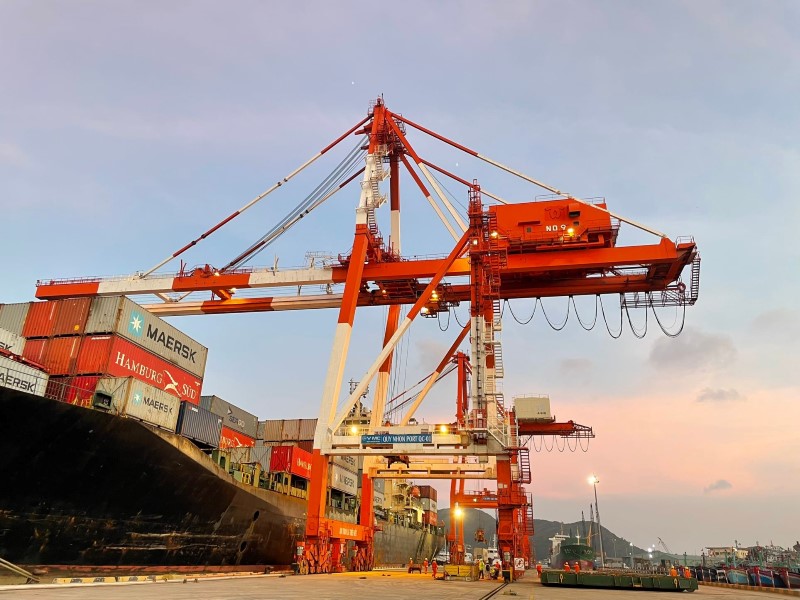
Sea freight continues to play a major role in Vietnam’s international supply chains because of its ability to handle large volumes of cargo.
Container shipping connects Vietnamese production centers with markets across Asia, Europe, North America and other regions.
For businesses shipping internationally, understanding the complete container journey is important. Cargo normally passes through several stages, including inland transportation, terminal handling, customs procedures, vessel loading, ocean transportation, destination port handling and final delivery.
For an example of international sea freight services, businesses can refer to Vinalines – Sea Freight from Hai Phong Port to Frankfurt Port, which provides information about international cargo transportation, customs procedures and sea freight operations.
Technology Is Reshaping Logistics Operations
Digital transformation is another major trend affecting logistics in 2026.
Logistics companies are increasingly using digital platforms, tracking systems, warehouse management software and data analytics to improve visibility across the supply chain.
Technology can help businesses:
- Track shipments in real time.
- Monitor inventory levels.
- Optimize delivery routes.
- Reduce manual errors.
- Improve warehouse operations.
- Share shipment information between partners.
Artificial intelligence is also becoming increasingly relevant to logistics. Recent cooperation between technology and logistics organizations has focused on AI applications in transportation, port operations, terminal optimization and supply chain management.
These developments indicate that future logistics competitiveness will depend not only on physical infrastructure but also on the ability to manage information effectively.
Green Logistics Is Also Gaining Attention
Sustainability is becoming another important consideration for logistics businesses.
Companies are increasingly looking at ways to reduce fuel consumption, emissions, empty transport capacity and unnecessary handling.
Green logistics can include:
- Optimizing delivery routes.
- Increasing vehicle utilization.
- Using energy-efficient equipment.
- Improving warehouse efficiency.
- Expanding multimodal transportation.
- Reducing unnecessary packaging and waste.
For manufacturers and exporters, environmentally responsible logistics can also support supply chain requirements from international customers.
What Businesses Should Focus on in 2026
As Vietnam’s logistics sector continues to develop, businesses should look beyond individual transportation costs and consider the entire supply chain.
Several priorities are becoming increasingly important:
1. Improve connectivity
Connect factories, warehouses, logistics hubs, ports and final markets more efficiently.
2. Use multimodal transportation
Combine road, rail, sea, inland waterway and air transport according to cargo requirements.
3. Control total logistics costs
Consider transportation, storage, inventory, handling and waiting time together.
4. Invest in digital technology
Use tracking and data systems to improve supply chain visibility.
5. Build more sustainable operations
Reduce fuel consumption, emissions and unnecessary movements.

Conclusion
Vietnam logistics in 2026 is moving toward a more connected, integrated and technology-driven supply chain model.
The future of logistics will not depend only on having more roads, warehouses or ports. More importantly, these infrastructure systems need to work together and support the actual movement of goods.
For businesses, better logistics means more than finding the cheapest freight rate. It means choosing the right combination of transportation, infrastructure, technology and services to deliver goods efficiently, reliably and competitively.
As international supply chains continue to evolve, companies that improve logistics visibility and connectivity will be better positioned to respond to changing customer demands and global trade requirements.
Related reading: Where Does a Container Go After Leaving the Port? – Vietship
